














Key Takeaways:
- The cost to make a dime includes metal, manufacturing, packaging, and distribution.
- In recent years, the U.S. dime has typically cost less than its face value to produce.
- Metal market behavior, energy, and production volume are the primary factors driving cost.
Behind every dime is a production process that blends metal sourcing, high-speed presses, quality control, and the national distribution system into one. The cost of making a dime is determined by a variety of factors and can fluctuate over time based on specific conditions.
In this guide, you’ll discover how much it costs to make this coin, the levels of production it takes to get dimes from presses to hands, which factors dictate how high or low the manufacturing prices are, and how American Hartford Gold can add value to your precious metals portfolio.
Cost of Making a Dime
Before you can quote a price, it’s important to define what factors go into it. The U.S. Mint accounts for more than just metal content. It includes the cost of copper and nickel, the labor involved in striking and inspecting coins, the packaging that protects coins during bulk transportation, and the shipping that moves rolls to Federal Reserve banks.
“Unit cost” refers to the total cost per coin after all of these categories are accounted for. Another factor is timing. The cost to make a dime changes from year to year because metal markets, labor, and energy also shift yearly. An annual average doesn’t fully capture day-to-day fluctuations, but it provides a fair representation of the budget for a full 12 months of production.
Metal and Materials
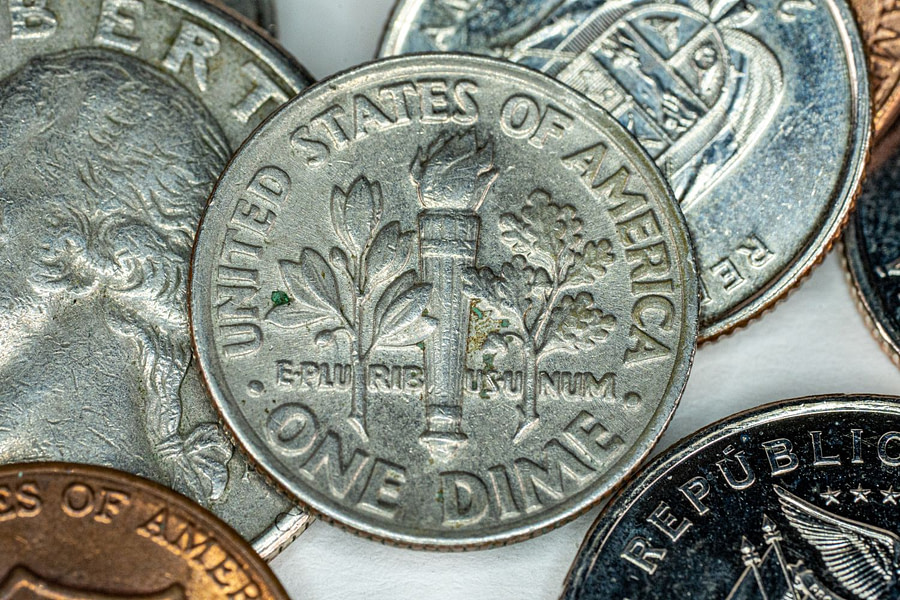
The modern dime is made of copper-nickel alloy. Inside sits a pure copper core that supplies the coin with the strength it needs to hold its shape. Copper also allows the piece to be lightweight and, therefore, cheaper to make than some other coins. Modern dimes do not contain silver.
The U.S. Mint also purchases packaging material that protects coins as they are transported by pallet. The cost of this, combined with blanks, die steel, and other production materials, all dictate the final cost to make.
Labor, Manufacturing, and Distribution
Once metal blanks arrive, high-speed presses strike both sides of the dime. Staff calibrate machines, inspect quality, and replace dies as needed. After striking, coins pass through counters and get rolled or bagged. Finished pallets are sent to the Federal Reserve’s distribution system, where they are stored and shipped to banks based on local demand.
Transportation affects cost, too. There are many moving parts involved in shipping coins out safely and on schedule. When production runs are large, fixed costs are spread across many coins. This “scale effect” is one reason the dime’s unit cost is typically able to stay below face value even when metals get more expensive.
What Other Factors Determine Dime Cost?
Metal prices are the largest driver because copper and nickel make up the majority of the dime’s materials budget. Energy, labor, die steel, and maintenance are factored in too. Even the mix of coins the U.S. Mint produces can affect costs.
This is because presses and people switching between multiple denominations take longer, driving labor costs upward. Additionally, when demand for coins rises, the U.S. Mint runs more shifts and spreads fixed costs across more units.
When demand falls, those fixed expenses are spread across fewer coins, and the unit cost can go up as a result.
Metal Market Behavior
Copper and nickel trade on global markets, and their prices can shift with industrial demand, supply disruptions, and energy costs.
Since both metals are essential to modern manufacturing, prices can fluctuate rapidly when factories increase or decrease production. The U.S. Mint buys metal on schedules that support steady production.
Hedging and long-term contracts can help reduce the impact of sudden spikes. These do not erase market risk entirely, but they can help keep operations more predictable. Predictability is valuable because it allows presses to run at speeds and on schedules that staff plan for months in advance. When procurement is steady, production runs more efficiently, and unit cost improves.
Production and Efficiency
As mentioned previously, high-volume production lowers unit cost because overhead is spread across more coins. Teams can plan die changes and lubrication schedules during longer runs, which reduces downtime. Staff can also build rhythm and skill more easily when a line runs the same coin for longer. A steady rhythm results in lower scrap rates and better quality control.
Frequent shifts between denominations can slow things down. Constantly moving from quarters to dimes means different blanks, different settings, and new inspection protocols for staff to adhere to.
The U.S. Mint works to limit these shifts, but demand often requires quick pivots. When this happens, you may see unit costs fluctuate until the market settles again.
How Does the U.S. Mint Measure and Report Cost?
The U.S. Mint publishes annual reports that reveal how much it costs to make each circulating coin.
The dime’s report includes materials, labor, and an allocation of overhead. It also includes distribution costs tied to transporting or shipping coins to the Federal Reserve. These reports offer the best window into the true cost per coin across an entire year.
A key concept in these reports is seigniorage. Seigniorage is the face value of a coin minus the cost to produce and distribute it. When the cost to make a dime is less than 10 pennies, the difference is positive and flows to the Treasury. That positive margin helps offset the higher cost of making other coins that sometimes cost more than face value.
Why Does Seigniorage Matter?
Seigniorage explains how the nation can supply coins without losing money on every denomination. If the dime and quarter generate positive returns, those gains can help balance the budget for pennies and nickels.
A small coin that costs less than face value to make supports the broader system in a major way and allows millions of cash transactions to happen across the United States. So, if the dime’s unit cost remained below face value in any given year, the system worked as intended.
What Do Annual Averages Reveal?
Annual averages help offset the potential chaos that comes with monthly market moves. They reveal the real cost of making billions of coins across several plants and staff shifts. These averages can help compare one year to the next to understand pricing trends. If material costs rise briefly, then settle, the annual figure will show a modest impact instead of a sharp spike.
Build Your Portfolio With AHG
Dime production is a process that includes metals, presses, staff, packaging, and a national delivery network. The dime’s small size and copper-nickel composition help keep its unit cost in a healthy range most years, which means the system tends to run smoothly.
If you want to expand your precious metals knowledge from dime production to asset holding, American Hartford Gold has some options for you. For clients planning for retirement, we offer a Gold IRA to protect the value of their savings. Start thinking about the future today.
FAQs
Does it usually cost less than ten pennies to make a dime?
Yes. In recent years, the U.S. Mint’s reported unit cost for the dime has been lower than face value. The exact figure changes as metal markets, energy, and production volume do, but the dime has typically remained low-cost to produce, allowing facilities to save more money per coin.
Why do pennies and nickels often cost more than their face values to make?
Their metal content and size give them less wiggle room between material cost and face value. When copper, nickel, or zinc prices rise, those coins can cross the line more easily. The dime’s ratio of metal to face value is more favorable, which helps it stay behind the line more often.
Who decides how many dimes to make each year?
The Federal Reserve shares demand forecasts with the U.S. Mint, and the U.S. Mint schedules production to meet that demand. If businesses and banks order more dimes, production rises. If recirculation improves, production can slow down.
Are modern-day dimes made of silver?
No. Modern circulating dimes are copper-nickel clad with a copper core. Only special collector products use different metals, and those are not accepted in everyday transactions.
What does “seigniorage” mean?
Seigniorage explains how the nation can supply coins without losing money on every denomination. It is the difference between a coin’s face value and the total cost to make and distribute it. When the cost to make a dime is below 10 pennies, the difference helps support the overall coin production budget.
Sources:
Understanding Unit Cost: Definition, Types, and Real-World Examples | Investopedia
About the Fed | Federal Reserve
What Is Procurement? Definition, Types, vs. Purchasing | Investopedia
Seigniorage Revenue and Monetary Policy | Dallas Federal Reserve


