









- The economy may look stable on the surface, but several leading indicators are flashing warnings.
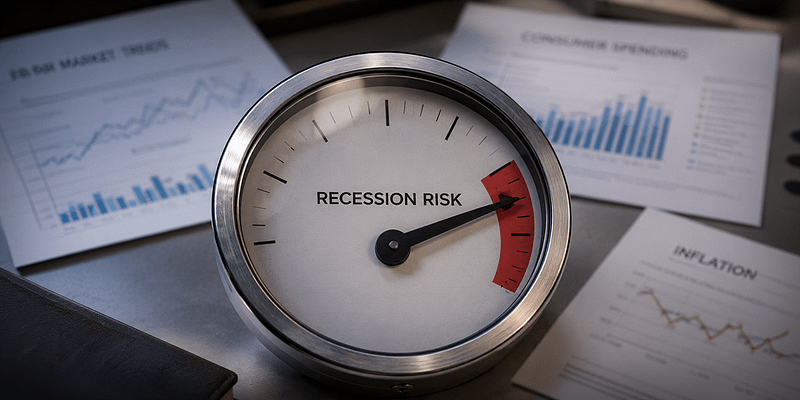
- Recession odds are rising as consumer spending weakens, hiring plans fall, and inflation remains stubborn.
- A Gold IRA can help protect your finances when recession pressure threatens traditional retirement assets.
Recession Risks Mount
Strong jobs numbers can make the economy look healthier than it really is. May brought 172,000 new jobs and unemployment held at 4.3 percent. On the surface, those numbers suggest resilience. Beneath the surface, economists are warning that the risk of recession is rising fast.1
Mark Zandi of Moody’s said, “Recession is once again a serious threat.” He put the probability of recession over the next 12 months at 49 percent. Other analysts are warning that recession may be closer than many Americans realize. The concern is not one weak data point. It is the combination of slowing consumer activity, weaker hiring plans, stubborn inflation, and a Federal Reserve with limited room to respond.2
The Jobs Picture Is Misleading
The May jobs report looked strong, but employment is often a lagging indicator.
Small business data is flashing a different warning. Only 9 percent of small businesses plan to hire over the next three months, the weakest reading since May 2020. Hiring plans have now declined for six straight months. Labor costs have also reached an all-time survey high, while business optimism remains below its 52-year average.3
Those figures matter because small business hiring plans tend to lead private payroll growth by about four months. If that relationship holds, negative private payroll growth could arrive by the third quarter of 2026. The risk is that the labor market could look stable right up until the moment it begins to weaken.
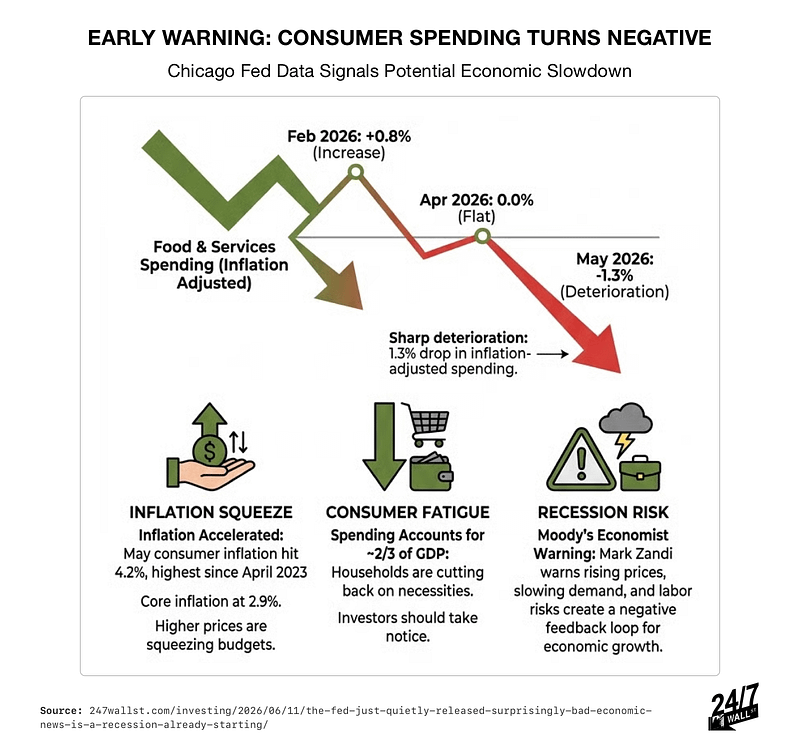
Consumers Are Under Pressure
Consumer spending is another major warning sign. Inflation-adjusted food and services spending fell 1.3 percent in May after being flat in April. Consumer demand drives roughly 70 percent of U.S. GDP, so even a modest slowdown can have a major effect.5
Households are also dealing with stalled real wage growth. Real disposable income has not grown over the past year, which means many Americans have less flexibility as prices remain elevated.
Zandi has described the economy as growing below its potential. He said, “Unless growth picks up, unemployment will rise and participation will fall, and at some point, undermine growth altogether.” A slowdown can then begin feeding on itself.6
Oil Could Make It Worse
Energy prices could turn a slowdown into something more serious. Rising oil prices tied to the Iran conflict have added another layer of inflation pressure. The Strait of Hormuz remains a key risk because any disruption could send energy markets even higher.
U.S. inflation is already running around 3 percent to 4 percent, well above the Federal Reserve’s 2 percent target. Global inflation is also elevated, with the IMF placing the average at 5.8 percent.
History adds to the concern. Every U.S. recession since World War II, except the pandemic recession, was preceded by an oil price surge.
The Fed Has Fewer Options
The Federal Reserve is in a difficult position. Normally, a weakening economy would push the Fed toward cutting interest rates to stimulate growth. Persistent inflation makes that harder.
If inflation expectations continue rising, the Fed may need to keep rates higher or even consider raising them. Higher rates can slow borrowing, pressure businesses, and weigh on stocks. For Americans with retirement accounts, a recession combined with high rates could create a difficult environment for paper assets.
The central bank is charged with maintaining price stability and supporting maximum employment. Inflation makes the first goal harder. A weakening labor market would make the second goal harder. If both problems arrive at once, the Fed may have no easy path.
Markets May Be Too Calm
One of the biggest risks is the disconnect between markets and the economy. Analysts have warned that U.S. stocks are detached from reality. Investors may be pricing in continued growth even as recession odds approach 50 percent.
The third quarter of 2026 is emerging as a tipping point, with projected negative private payroll growth on the horizon. Small-business hiring plans, weakening consumer spending, energy-driven inflation, and limited Fed flexibility all point in the same direction. Any one of those factors would be concerning. Together, they suggest the economy may be more fragile than headline data shows.
Conclusion
Recession warnings do not guarantee a downturn. They do show that Americans may need to prepare for more volatility, weaker growth, and more pressure on traditional retirement assets.
Physical gold and silver have long been used to help protect wealth during periods of economic uncertainty. Unlike stocks, bonds, or cash, physical precious metals are real assets that do not depend on corporate earnings or government promises. For retirees and savers worried about recession risk, physical precious metals can help balance a retirement strategy.
If you want to protect your portfolio with physical precious metals in a Gold IRA, contact AHG today at 800-462-0071 .


