















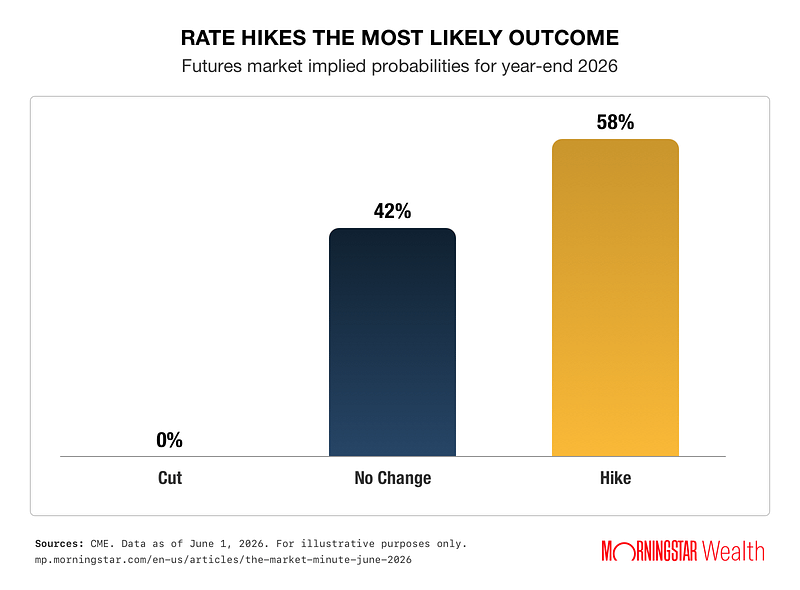
- Rising inflation has shifted the market conversation from expected rate cuts to possible rate hikes.
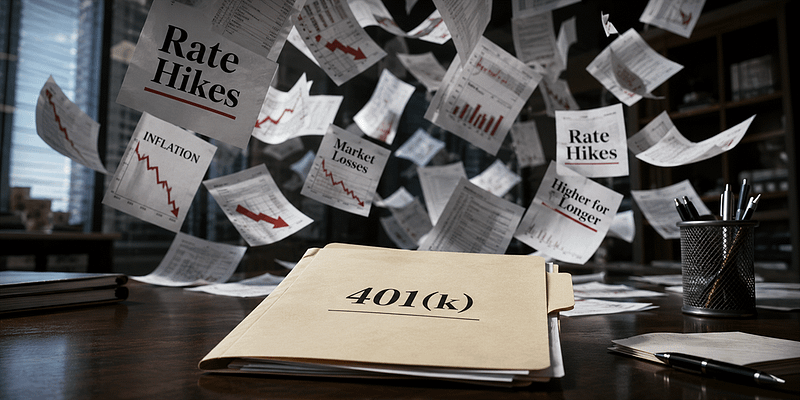
- Higher rates could pressure AI stocks, major indexes, and the 401(k)s tied to them.
- A Gold IRA can help protect your finances from inflation, policy mistakes, and market volatility.
The Risk of Rising Interest Rates
For months, markets waited for the Federal Reserve to cut interest rates. Wall Street built much of its optimism around that expectation. Lower rates would make borrowing cheaper and support high prices for future growth. There is a record $22.8 trillion in the U.S. M2 money supply. When that much money is in the system, investors often become more willing to overpay for companies whose biggest profits are expected years from now.1
Rising inflation is changing the conversation. Instead of asking when rate cuts will arrive, markets now face a harder question: Could the Fed be forced to raise rates again?
The possibility matters for anyone with money in the stock market. Higher rates can pressure the technology names that have powered major indexes. If those stocks weaken, the damage can reach mutual funds and 401(k) balances. Under these conditions, more individuals and institutions are turning to gold to help protect the value of their savings.
Inflation Changes the Fed’s Path
The Consumer Price Index rose 0.6% in April, pushing the 12-month inflation rate to 3.8%. Energy prices were a major driver, rising nearly 18% over the prior year.2
The Fed wants inflation near 2%. When prices stay high, central bankers worry that people will start planning around even higher prices. Consumers buy sooner because they expect costs to rise. Businesses raise prices to cover future expenses. Workers demand larger paychecks to keep up. Once that cycle begins, inflation becomes harder to break.
Cleveland Fed President Beth Hammack recently warned that current rates may not be high enough to bring inflation back to target. She also suggested that if recent trends continue, raising rates may soon be appropriate.
Politics Wants Lower Rates
The White House wants borrowing costs to fall. Lower rates can support growth, make housing more affordable, and reduce the cost of servicing the national debt. With federal debt near $39 trillion, even small changes in rates carry enormous consequences.
Inflation makes that relief harder to deliver. Cutting rates while prices are rising can stimulate demand at the wrong moment. It can also weaken confidence that the Fed will defend the dollar’s purchasing power. Political pressure may favor easy money, while inflation data may force the Fed to stay tight.
AI Stocks Look Exposed
The AI boom has added trillions of dollars to the market. Investors have paid rich multiples because they expect years of growth.
Higher rates hit that math directly. When rates rise, future profits are discounted more heavily. Earnings expected years from now become worth less today. Growth stocks trading at 35, 40, or 50 times earnings can be especially vulnerable.
AI technology can keep spreading while AI stock prices still fall. Investors may still decide today’s valuations are too expensive in a higher-rate world.
401(k)s Could Feel It
Many retirement savers own broad index funds and believe that gives them full diversification. Yet major indexes have become heavily influenced by mega-cap technology stocks. When those names climb, retirement balances often benefit. When they fall, the same accounts can suffer.
A valuation reset can happen without a recession when investors demand lower prices for future growth. Rate hikes matter far beyond Wall Street because they can reach ordinary Americans through retirement accounts.
Gold’s Role in a Policy Squeeze
Gold can face short-term pressure when interest rates rise because it does not pay interest. Higher yields can make cash and bonds look more attractive for a time. Yet rising federal debt is making some investors question how safe government securities really are.
Sprott President Ryan McIntyre said, “If you want to avoid being affected by the prospect of those government securities becoming riskier, all roads lead to gold.” 4
The longer-term case for gold is built on a broader foundation. The country is dealing with persistent inflation, heavy debt, and a Fed with fewer easy choices. Higher rates make debt more expensive and pressure stock valuations. Lower rates can feed inflation and weaken confidence in paper money.
Physical gold and silver have historically appealed to investors during periods of monetary stress. They are hard assets rather than promises tied to a government balance sheet or a corporate earnings forecast. For investors concerned about inflation, policy mistakes, and market concentration, precious metals can provide protection outside the paper financial system.
Conclusion
Markets spent months expecting rate cuts. Rising inflation has put rate hikes back on the table. If the Fed is forced to tighten again, AI stocks and the retirement accounts tied to them could face a painful repricing.
Hard assets give investors a way to prepare before volatility hits. If you want to protect your portfolio with physical precious metals in a Gold IRA, contact AHG today at 800-462-0071.


