















- Gold may remain volatile as markets react to Iran conflict headlines, oil prices, and interest-rate expectations.
- A ceasefire could reduce the fear premium, but central bank buying and de-dollarization continue to support gold’s long-term case.
- A Gold IRA can help protect your finances from inflation, volatility, and uncertainty in the dollar-centered financial system.
Beyond the Fear Premium
The conflict involving Iran has reminded investors how quickly global uncertainty can move through oil prices, currencies, and market confidence. When risks spread across the financial system, gold often comes back into focus as investors look for safe havens.
The short-term path for gold may depend on how the conflict unfolds. Whether fighting ends quickly, flares on and off, or drags into a prolonged campaign, each scenario carries different implications for gold prices. However, debt concerns, inflation pressure, central bank buying, and de-dollarization continue to support the long-term case for gold.
When Peace Headlines Can Pull Gold Lower
A ceasefire or lasting peace agreement could remove one of the most immediate reasons traders have been buying gold: the fear premium. When investors pile into gold because of geopolitical danger, prices can rise above levels justified by fundamentals alone. Once that fear fades, so can the premium built into the price. Gold may soften as investors conclude the worst-case scenario has passed.
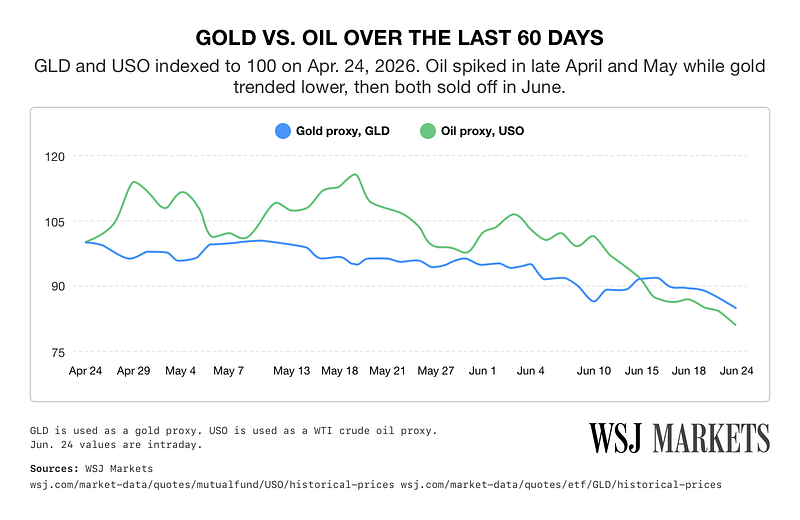
Recent market action showed how complicated the reaction can actually be. Gold rose after ceasefire headlines, while oil dropped sharply and the dollar weakened. UBS analyst Giovanni Staunovo noted that gold was being supported by declining oil prices, reduced inflation pressure, and higher expectations for rate cuts. Even as geopolitical fear eased, other forces stepped in to support the metal.1
Why On-and-Off Conflict Creates Volatility
An intermittent conflict can be one of the most difficult environments for gold. Markets may rally on escalation, then reverse when ceasefire hopes return. Traders may react to each new headline instead of following one clear direction.
Speculative investors, sovereign buyers, and trend-following funds all played a role in recent price action. Michael Brown of Pepperstone warned that if a ceasefire fails, markets could return to “square one” with higher crude prices, a stronger dollar, and pressure across major asset classes. Gold’s short-term direction may change with each headline, but the reasons people hold gold for protection do not disappear when markets swing.3
If the Conflict Continues
If the conflict continues, gold could still find near-term support from safe-haven demand and heightened geopolitical uncertainty. But if fighting keeps oil prices elevated, the resulting inflation pressure could make central banks more cautious about cutting rates, which is usually a headwind for gold rather than a tailwind. In other words, the conflict can support gold through risk aversion even as higher energy costs limit upside by keeping real rates firmer.
Sovereign buying is predicted to return as central banks rebuild reserves and look for a store of value outside the U.S. dollar and Treasury market. Long-term buying from central banks often reflects broader concerns about currencies, debt, and financial dependence rather than short-term fear.
The Long-Term Case Remains Intact
Even if the war fades from the headlines, gold’s long-term support remains tied to larger economic forces. Record fiscal deficits are raising concerns about sovereign debt sustainability. As a result, central banks are choosing gold over Treasuries. Real yields are being pointed to as a major driver of gold prices. When real yields fall, gold can become more attractive because the cost of holding it decreases.
De-dollarization is becoming structural and persistent. More countries are weighing how much they want to rely on dollar-based reserves in a world shaped by sanctions, deficits, and shifting alliances. Inflation may also stay above pre-pandemic levels as reshoring and energy instability keep costs elevated. Gold is a traditional hedge against inflation because it retains purchasing power as the value of fiat currency drops.
Ewa Manthey, commodity analyst at ING, said, “We continue to believe the structural drivers supporting gold remain intact, though the path higher is likely to be slower and more volatile.”4
A Pullback Could Be an Opportunity
Gold may dip if the war ends and the fear premium fades. A short-term decline does not automatically weaken the long-term case. Lower oil prices and calmer markets may improve sentiment, while debt, inflation risk, and reserve diversification continue to support demand.
For retirement savers, the key question is not only where gold trades next week. The bigger question is whether a portfolio is prepared for the kind of instability that can outlast any single headline. Gold’s path may stay uneven as markets digest war news. Yet the macro forces behind gold’s appeal remain in place, from America’s debt burden to stubborn inflation and growing uncertainty around the dollar-centered financial system. In this kind of environment, gold’s role as a long-term store of value becomes more important.
If you want to learn more about protecting your portfolio with physical precious metals in a Gold IRA, contact AHG today at 800-462-0071.