












- Central banks are expected to keep adding gold to their reserves over the next year.
- Gold demand is being driven by diversification, de-dollarization, and global uncertainty
- Physical gold in a Gold IRA can help protect your finances from inflation, volatility, and currency risk.
Central Banks Choose Gold
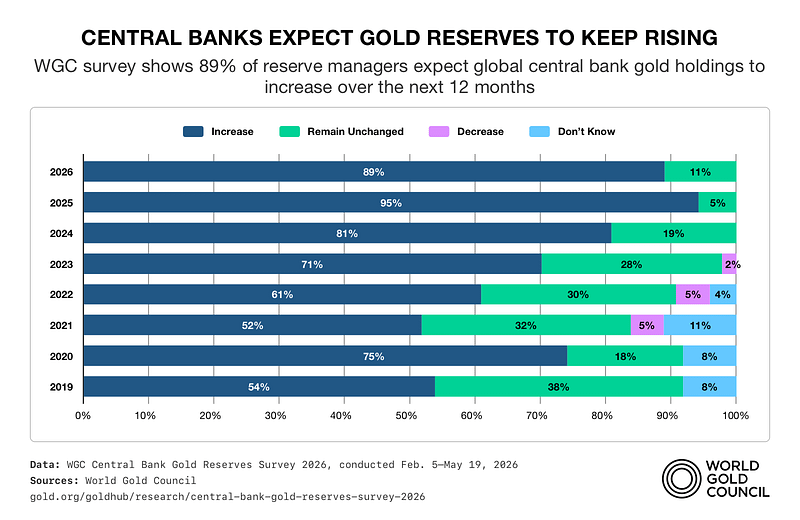
The World Gold Council completed its most recent central bank study. And the survey says: buy more gold.
According to their results, 89% of reserve managers expect global central bank gold holdings to increase over the next 12 months. While a record 45% expect their own institutions to add to reserves. Gold is moving closer to the center of reserve strategy as central banks respond to inflation pressure, currency risk, and global instability.
When the world’s most powerful financial institutions turn to gold for stability and protection, individuals may want to consider what that means for their own portfolios.
Demand From Official Buyers Remains Strong
Central banks have been buying gold at a much faster pace than they did in the past. Over the last four years, official-sector purchases have averaged about 1,000 tonnes per year, roughly double the average pace seen during the prior decade.
Sustained demand at that scale can help create a more durable foundation under gold prices, providing support that retail or investor flows alone rarely match. Consistent official buying reduces available supply and reinforces confidence in gold’s long-term role.
Gold’s Strategic Role Is Growing
Central banks tend to move with long-term goals in mind. They make decisions based on reserve strength, financial stability, and the need to protect national wealth over many years. As a result, many reserve managers now view gold as a strategic monetary asset within the broader reserve mix. They are relying on it for diversification, resilience, and stability.
Changing views on the U.S. dollar are also part of the story. One survey quote noted, “We expect that there will be a downward shift in the share of total reserves held in U.S. dollars,” reflecting a broader push among some central banks to spread risk more widely.2
De-dollarization is another motive behind the move into gold. Some central banks want to reduce their reliance on the U.S. dollar and spread their reserves across assets that are less exposed to American policy, sanctions risk, and currency swings.
Gold can help fill that role because it is no one else’s liability. It does not depend on the creditworthiness of a single government, bank, or institution. In a world where debt levels remain high and currency confidence can shift quickly, that independence carries real value.
Looking forward, 84% of survey respondents expect gold to make up a greater share of global reserves within five years. A separate 74% expect the dollar’s reserve share to decline over the same period. Those two trends are closely connected, and both point toward continued gold accumulation at the official level.3
Why Central Banks Are Buying
Diversification remains the leading reason central banks are adding gold. The survey found that 31 of the 34 central banks planning to increase gold reserves cited diversification as a key motivation.
Reserve managers are also focused on gold’s performance during periods of crisis. A record 90% of survey respondents cited gold’s behavior during times of stress as a major reason for holding it. Gold has earned that reputation across decades of market turmoil, inflation shocks, and geopolitical conflict.4
Inflation is another major factor. Gold has long been viewed as a store of value when paper currencies lose purchasing power. Central banks have watched years of high government spending and elevated debt reshape the financial landscape. Many are responding by building more protection into their reserves.

A Broader Group of Buyers
Central bank gold demand is also becoming more widespread. Emerging-market central banks remain major buyers. They look to gold for stability as they face greater currency swings, geopolitical risk, and market volatility. But interest is no longer limited to them. Some advanced-economy central banks also expect to increase their holdings as the global economy grows more unpredictable.
A wider buyer base can strengthen the long-term case for gold. When more countries participate in the market, demand becomes less dependent on a small group of institutions.
Conclusion
Persistent buying by central banks matters because it reflects deep, structural demand. Reserve managers are making multi-year decisions based on liquidity, protection, and resilience.
The bigger picture is clear. Official-sector demand remains firm, the buyer base is broadening, and the strategic case for gold is staying strong. A market supported by central bank demand tends to have a more durable foundation, especially when inflation, debt, and global uncertainty remain elevated.
Faced with the same volatility, individuals may want to consider adopting the long-term strategy of central banks. Adding physical gold to your portfolio in a Gold IRA can safeguard its value. To learn more, contact AHG today at 800-462-0071.


