

















Markets Face a Demographic Shift
Americans face a quiet shift in wealth as the baby boomer generation retires en masse. Born between 1946 and 1964, boomers hold a massive chunk of the nation’s financial assets. Their move from saving to spending will reshape markets over the next two decades. Younger cohorts like Gen X and millennials lack the numbers and savings rates to fully offset this change.
Stock prices rely on steady demand from new buyers. Without enough of them, valuations face downward pressure. Americans can prepare for this shift now, with physical gold offering a way to safeguard portfolio value.
Demographic Impact
Population age structures influence economic forces. Japan provides a clear example. Its stock market has struggled for decades amid a shrinking workforce and rising retiree population. Working-age adults drive corporate growth through labor and consumption. Retirees draw down savings to cover living expenses.
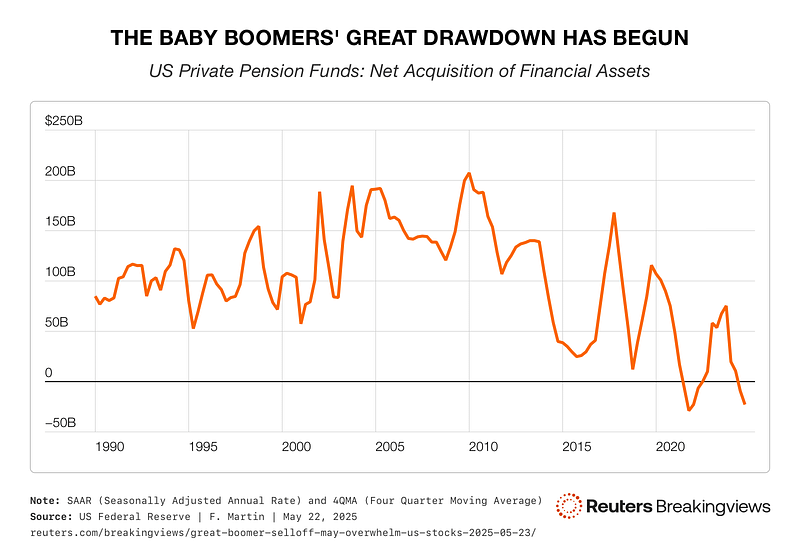
Boomers represent about 20 percent of the U.S. population but control over 50 percent of stock market wealth, according to recent Federal Reserve data. Their peak earning years fueled the long bull market since the 1980s. Households headed by those over 65 already own 30 percent of all equities, as they now retire in droves. 1
Gen X numbers only 65 million, far short of the 76 million boomers. Millennials total around 72 million but carry heavy student debt and homeownership hurdles. Many delay major investing. A 2025 Gallup poll showed just 57 percent of Gen X and millennials own stocks, compared to 68 percent of boomers. Lower participation rates mean less capital flowing into equities. Pension funds and 401(k)s once absorbed boomer savings. Those vehicles now mature into payouts. The net result squeezes demand.2
Economists have studied this pattern for years. A Brookings Institution review of global research found consistent links between aging populations and lower equity returns. Countries with more retirees see reduced savings rates and slower capital formation. Brookings scholars noted that stock prices correlate with the ratio of middle-aged savers to retirees. When retirees dominate, asset prices adjust lower over time. U.S. data mirrors this trend. The prime investing age group, 35 to 54, will shrink relative to those over 65 by 2035.3
Why Stocks Face Pressure
Retirees sell assets to generate income. Boomers plan to withdraw trillions from retirement accounts through 2040. Vanguard estimates $4 trillion in annual distributions from 401(k)s alone by decade’s end. Not all sales hit stocks directly. Bonds and real estate play roles. Still, equities bear much of the load. 4
5
Corporate earnings depend on population growth. An older America means fewer workers and consumers. Labor force expansion, which averaged 1.5 percent annually post-World War II, now hovers near zero. Productivity gains help but cannot fully replace headcount.
JPMorgan analysts highlighted this risk in a 2024 report. Aging drags on GDP growth, which curbs profit expansion. Slower earnings growth translates to modest stock returns at best. Historical cycles bear this out. The U.S. market enjoyed tailwinds from a rising worker-to-retiree ratio from 1965 to 2000. Reversals followed. Japan’s Nikkei peaked in 1989 as its demographics soured. European markets stagnated through the 2010s for similar reasons. Academic papers quantify the effect. One study in the North American Journal of Economics and Finance pegged a 10 percent rise in the retiree share to a 15 percent drop in stock returns over five years.6
Younger investors add complexity. Many favor real estate or crypto over traditional stocks. Home affordability issues sideline their savings. Student loans consume cash flow. Meanwhile, boomers are living longer. Average retirement now spans 20 to 25 years. Prolonged drawdowns amplify selling pressure. Central banks cannot fix structural demographics. Rate cuts spur short-term rallies but fail against long-term supply gluts in equities.
Protect Portfolio Value
Gold has historically held up when stocks struggle, often moving higher during periods of market stress.
Recent moves reinforce that pattern. Gold surged more than 60% in 2025 alone, one of its strongest annual gains on record, as uncertainty weighed on traditional assets.
Looking ahead, major institutions still see upside. JPMorgan Chase is forecasting gold could reach roughly $6,300 per ounce, with multiple banks calling for $6,000+ levels.7
Gold is not tied to corporate earnings or economic growth. Its role is different. It can help preserve purchasing power when conditions shift and markets come under pressure.
Even in retirement, portfolio value still matters. Income, withdrawals, and legacy planning all depend on it. Consider speaking with American Hartford Gold to learn how a Gold IRA can help protect your portfolio. Call 800-462-0071 today.