






- The Supreme Court ruling reshaped tariff authority and created new uncertainty for businesses, markets, and global trade.
- Tariffs raise consumer prices, increase inflation risk, and may delay interest rate cuts and economic growth.
- Physical gold can help protect your finances during inflation, market volatility, and ongoing economic uncertainty.
A Major Legal Decision Reshapes Trade Policy
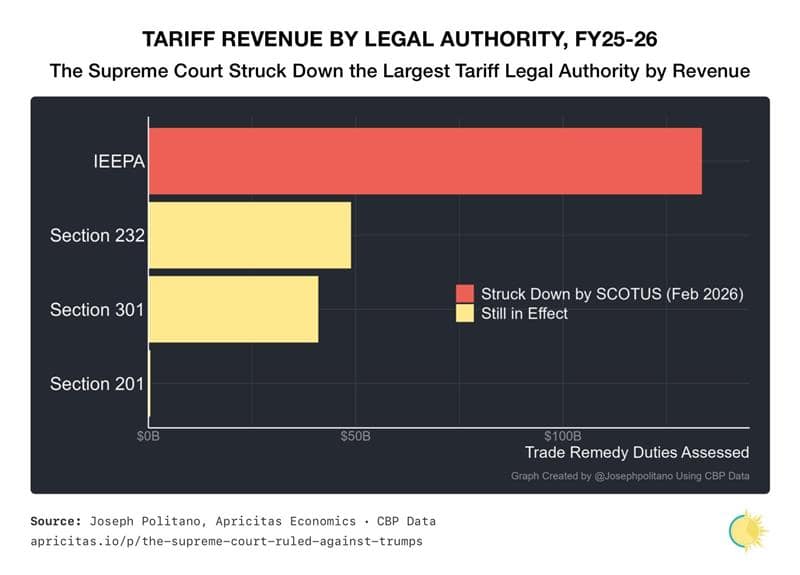
On February 20, the Supreme Court made a decision that reshaped U.S. trade policy. The Court ruled that many of President Donald Trump’s tariffs were unconstitutional. They found that he could not use the 1977 International Emergency Economic Powers Act to impose global tariffs. The ruling reinforced a key constitutional principle, stating that the power to tax lies with the legislative branch.
This decision immediately changed how tariffs could be imposed. The administration responded by using Section 122 of the Trade Act of 1974. It allows temporary tariffs of up to 15% for 150 days. However, Congress must approve any extension after that period.
These legal changes will directly affect prices, the dollar, and the long-term security of personal savings.
1
Confusion Surrounds New Tariff Implementation
After the ruling, the administration quickly imposed a new 10% global import tariff. U.S. Customs and Border Protection informed shippers that imports would “be subject to an additional ad valorem rate of 10%”. Officials then signaled plans to raise it to 15%.2
This fast-changing situation has created widespread confusion. William Bain of the British Chambers of Commerce described the growing frustration. He said, “There is a weariness about the constant changes, the lack of any clarity and certainty in terms of tariffs… [Businesses] are frustrated and exasperated.”3
When businesses do not know their future costs, they delay hiring, expansion, and investment, slowing economic momentum.
Higher Prices, Inflation, and Greater Pressure on Consumers
Tariffs increase costs for companies that import goods. Those companies often pass those costs on to consumers. Over time, consumers absorb much of the burden.
Data shows just how much consumers carry this burden. Yale’s Budget Lab found Americans have absorbed 31–63% of tariff costs through higher prices. The New York Federal Reserve estimated businesses and consumers pay nearly 90% of tariff costs.4
Tariffs can also increase inflation across the broader economy. When inflation remains elevated, the Federal Reserve may delay cutting interest rates. Higher interest rates make borrowing more expensive, slowing home purchases, investment, and job growth.
Smaller businesses are especially vulnerable. They have fewer resources to absorb rising costs or adjust their supply chains.
Legal Battles and Refund Uncertainty
The Supreme Court ruling invalidated earlier tariffs that ranged from 10% to as high as 50%. This opened the door for companies to seek refunds for an estimated $130 billion in past payments. Hundreds of companies have already filed lawsuits, though the process may take years.
The White House has not confirmed whether refunds will be issued, and the outcome remains unclear. This legal uncertainty creates financial strain for businesses. Companies must operate without knowing whether they will recover past losses or face new tariff costs.

Global Trade Disruptions and Rising Demand for Gold
The ruling has also disrupted global trade relationships. Countries including Japan, Britain, and the European Union now face ambiguity about existing agreements. One Japanese ruling party member described the situation as “a real mess.”5
These disruptions affect supply chains, business confidence, and global markets. Investors have responded by moving toward assets that have historically held their value during unpredictable times.
Gold rose after three consecutive weekly gains. Trade uncertainty and a weaker dollar fueled the rise. Bullion climbed as much as 2.2%, surpassing $5,200 an ounce before settling near $5,180.
Silver also moved higher, rising 3% to the $90 an ounce level. Gold has risen over 18% so far this year, following its best annual performance since 1979.6
Conclusion
The Supreme Court ruling has reshaped U.S. trade policy and sparked new volatility. Temporary tariffs are in place, legal battles continue, and businesses and consumers face higher costs. These changes can increase inflation, delay interest rate cuts, and slow economic growth.
When inflation rises and economic conditions become unpredictable, traditional financial assets may face pressure. Gold’s strong performance shows how investors respond to uncertainty by turning to physical assets with a long history of preserving value.
You can protect your financial future from the impact of trade disruption with physical precious metals. A Gold IRA offers long term protection from economic instability and helps safeguard your retirement savings. Call American Hartford Gold today at 800-462-0071 to learn how physical gold and silver can help secure your financial future.