












- Rising inflation and slowing growth are increasing the risk of stagflation
- Higher energy costs are driving prices up while weakening economic momentum
- A Gold IRA can help protect your finances from the impact of stagflation
Pressure Builds Across Economy
Higher prices alone are tough. Slower growth can be managed. But when both arrive together, the outcome is much more serious. Paychecks stretch less, savings lose value, and investment returns become harder to predict. Suddenly, retirement plans built on steady expectations look much less secure.
Economists have a word for this: stagflation, when rising inflation combines with weak economic growth. Recent developments suggest that this risk is moving from theory to reality. Conflict in the Middle East has driven oil prices higher, and those increases are spreading through the global economy.1
Concerns have risen quickly. Some economists now warn the United States faces a “quite high” risk of stagflation as energy costs climb while growth slows. Nobel Prize–winning economist Joseph Stiglitz said the U.S. was “the country most at risk” of entering stagflation, similar to what happened during the oil shocks of the 1970s.2
Even before recent events, signs of strain were building across the economy. New data showed consumer prices in February rose 3.5% year-over-year, while economic growth slowed to just 1.2% in the last quarter of 2025.3
Oil Shock Changes Outlook
Energy sits at the center of this shift. The Strait of Hormuz, a narrow waterway between Iran and Oman, carries roughly 20% of the world’s crude oil supply. Any disruption can send prices sharply higher.
Since the latest escalation in conflict, oil prices have surged more than 45%, reaching over $120 per barrel.4 Higher fuel costs raise transportation, manufacturing, and shipping prices. Businesses facing those new expenses often pass them along, driving inflation into everyday goods.
Energy-driven inflation rarely stays contained. Rising fuel prices increase fertilizer and food costs, which then boost grocery prices months later. Each stage adds another layer of pressure on households and businesses.
Growth Starts to Stall
Even as prices rise, the economy is slowing. Goldman Sachs recently put the chance of a U.S. recession within the next 12 months at 30%, up from 20% earlier this year.5
Businesses hesitate to invest when costs and demand are uncertain. Households react the same way. When essentials like gas and food get more expensive, discretionary spending drops. The University of Michigan’s Consumer Sentiment Index fell to 65.4 in March, its lowest reading since 2023.6
When consumers spend less, business revenue slows, creating a feedback loop that weakens economic momentum.
Fed Caught in the Middle

7
The Federal Reserve now faces a tough balancing act. Interest rates sit between 3.50% and 3.75% after a series of cuts last year aimed at softening the slowdown. Lowering rates further could boost growth but risks fueling more inflation. Raising them again could cool prices but also risk tipping the economy into recession.
Economists call this a supply-driven shock: energy and cost pressures push inflation higher while slowing production and demand. How long this lasts will determine whether stagflation takes hold.
Echoes of the Past
Rising oil prices and slowing growth have sparked comparisons to the 1970s. Back then, the U.S. saw a blend of high inflation and weak economic output. Between 1973 and 1982, inflation averaged 8.7% per year, while GDP growth slowed to below 2.5%.8
One key difference today: the U.S. produces far more of its own energy. Domestic oil output reached 13.5 million barrels per day in early 2026, an all-time high. 9 That helps cushion, but not eliminate, the effects of global price spikes on U.S. consumers.

Not All Assets React the Same
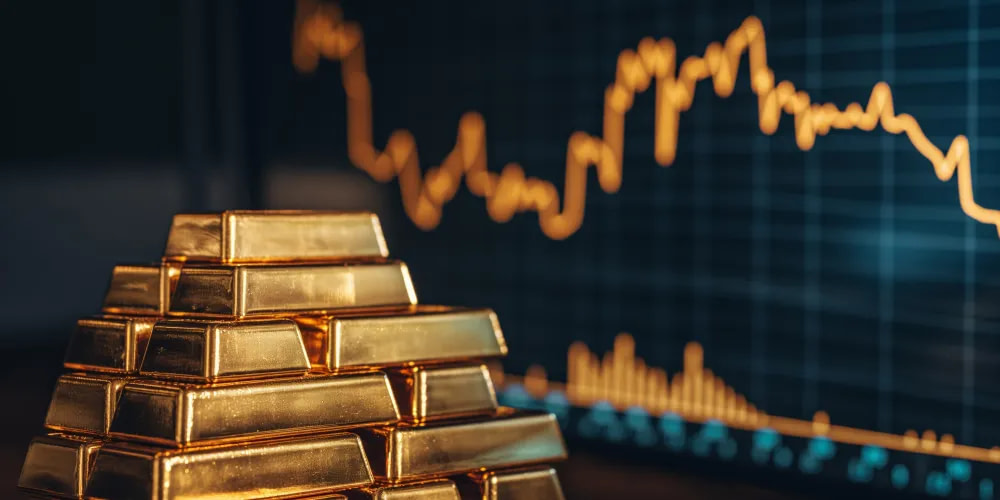
Traditional assets often struggle during stagflation. Stocks face profit pressure from slower growth, and bonds can lose value as inflation rises. But some assets have historically fared better. Commodities and precious metals, for example, tend to hold or even gain value during inflationary stretches.
Gold, in particular, has a reputation as a hedge. Its value doesn’t depend on interest rates or corporate earnings, so it often acts as a store of wealth when purchasing power declines. During the last inflation wave in the late 1970s, gold prices rose from around $185 an ounce in 1974 to over $600 by 1980.10
Conclusion
Rising energy costs, slower growth, and persistent inflation together raise the risk of stagflation, a mix that can erode savings and challenge retirement strategies. Historically, many investors have turned to physical gold to protect their portfolios during these uncertain times.
For those looking to preserve long-term value, adding physical precious metals to a tax advantaged Gold IRA remains a well-known safeguard.
To learn how to include gold in a retirement strategy, call American Hartford Gold at 800-462-0071 today.