












Gold’s Long Term Outlook Holds
Gold’s path has been anything but smooth lately. Sharp swings are grabbing attention, but the bigger picture has not changed. Gold’s long-term case remains intact, and for those focused on protecting wealth, it continues to play a steady role beyond short term price moves.
After reaching record highs above $5,500 to $5,600 earlier this year, gold turned lower. It broke below key support around $4,960, a price level where buyers had consistently stepped in to hold prices up. Prices also fell below the 50-day moving average, a level closely monitored by many short-term traders. Once that level broke, it signaled potential weakness and drew in more selling.1,2
On March 23, U.S. futures briefly dropped into the low 4,100s. Spot prices fell to about $4,097 before recovering, a reminder of how quickly sentiment can shift in this market. Even with that rebound, gold had already declined for multiple sessions and was coming off one of its weakest short term stretches in decades.3,4
A Sudden Reversal Shows How Fast Markets Can Shift
The same day gold hit those lows, the market turned sharply higher. Prices rebounded after President Donald Trump announced that the United States would postpone planned military strikes on Iranian infrastructure and continue negotiations.5
The shift in tone had an immediate impact across markets. Oil prices dropped, the dollar moved lower, and gold bounced off its intraday lows. A weaker dollar tends to support gold by making it more affordable to global buyers.
The move highlights how sensitive gold can be to geopolitical headlines. Markets had been pricing in escalation, then quickly adjusted when the outlook changed. Volatility like this is likely to continue as new developments unfold.
Short Term Pressure Is Still Real
Even with that rebound, gold remains under pressure in the near term. A stronger dollar leading into the selloff, along with expectations that interest rates may stay higher for longer, has weighed on prices.
Higher energy prices tied to conflict have also pushed inflation expectations higher. Real yields, which reflect interest rates after adjusting for inflation, have moved higher as a result. When investors expect inflation to stay elevated, interest rates often rise as well, pushing real yields up. Higher real yields can reduce the appeal of holding gold since it does not produce income.
Forced liquidations have added to the pressure. When investors need liquidity, gold is often sold alongside other assets. Pullbacks like this tend to be driven more by positioning and liquidity than a change in the long-term story.
Geopolitics Is Pulling Gold in Both Directions
Global tensions continue to influence gold, but not always in a predictable way. The risk of conflict in the Middle East has driven safe haven demand at times, helping push prices higher earlier this year.6
At the same time, those same tensions have contributed to rising energy prices and inflation expectations. Together, they support higher rates and a stronger dollar, both of which can weigh on gold.
Recent price action reflects that push and pull. Gold can rise on fear, then fall as rate expectations shift. Many analysts describe the current setup as structurally bullish, tactically nervous.7
The Long-Term Outlook Remains Intact
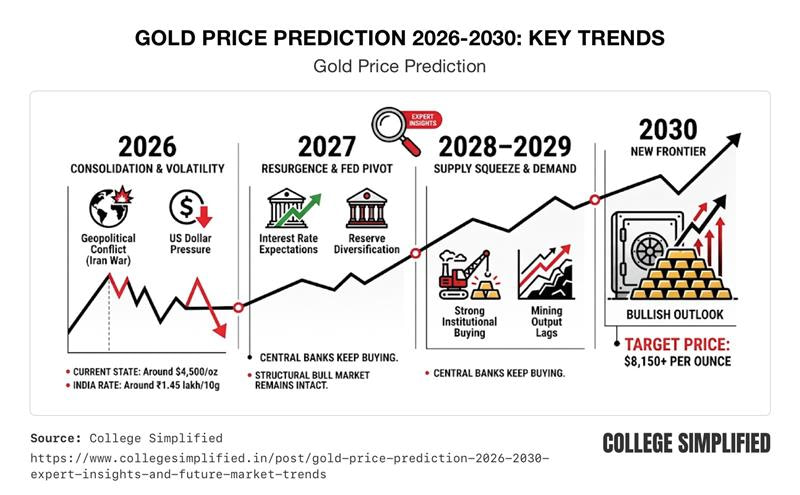
Even with short term pressure and the risk of further downside if gold does not reclaim the $4,900 to $5,000 support range, the longer term outlook remains intact. Many large institutions and bullion banks continue to project higher prices over time. Forecasts range between $5,000 and $6,200 and some scenarios reaching $6,500 to $8,000.9
Gold remains supported by ongoing geopolitical risk, continued central bank buying, and the potential for policy easing later in the cycle. Even after the recent decline, gold is still operating within a broader trend that has been building over time. Pullbacks, even sharp ones, are part of that process.
Conclusion
Gold’s recent pullback shows how rapidly markets can move, but it also highlights the importance of looking beyond short-term swings. Price moves driven by headlines, interest rates, and liquidity can shift quickly, while the long-term drivers behind gold remain in place.
Investors who take a longer view tend to focus less on daily movement and more on overall direction. Gold has long been used to preserve wealth during uncertain times, and that role continues even in periods of volatility.
For those focused on protecting wealth over time, gold continues to offer a stable foundation. If you want to take steps toward long term protection, consider holding precious metals in a tax-advantaged Gold IRA. Learn more from American Hartford Gold by calling 800-462-0071 today.


