












Key Takeaways:
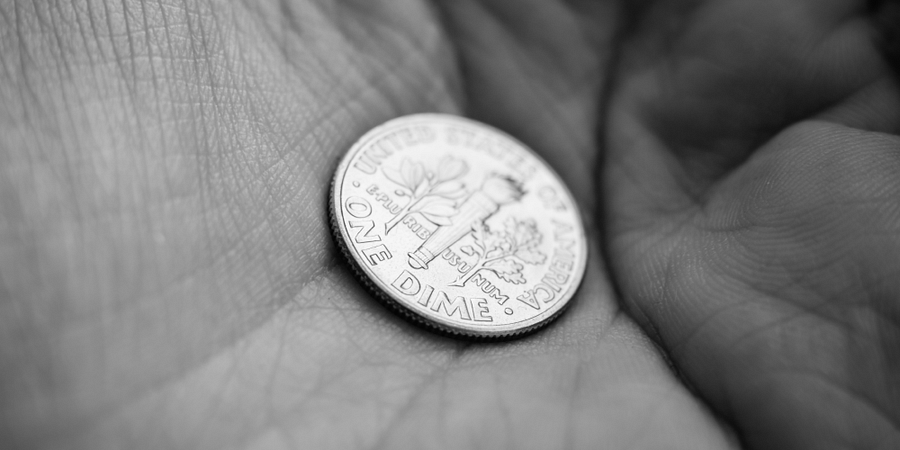
• Every U.S. dime made during or before 1964 is 90% silver and weighs 2.5 grams, or about 0.0723 troy ounces of pure silver.
• A silver dime’s value centers around its silver content. Rare dates, mint-mark errors, and quality can increase value.
A single dime may seem insignificant, but older ones can be worth a decent amount. Before 1965, the U.S. Mint made all dimes with 90% silver, and many are still around. Their value climbs higher when it comes to rare dates like the 1916 D Mercury dime.
These silver coins can teach you a lot about U.S. history and currency in general. In this article, we’ll discuss what silver dimes are made of, their melt value, and more.
Silver Dime Composition and Design
A dime’s core value stems from what it’s made of, and each time period adds its own special details that can increase its worth even more.
Barber Dimes
Charles Barber’s Liberty Head dime came out in 1892 with matching quarters and half dollars.
Barber dimes follow the same 2.5 gram, 90% silver rule as later coins, but the date and limited production of some make certain pieces worth more than their silver content alone. Common dates like 1902 P or 1914 S often sell near melt value.
Rare dates like 1895 O, 1896 S, and 1904 S can be worth much more, even if they’re heavily worn. For example, an 1896 S in low grade can still bring in over $150 since fewer than 200,000 were made in San Francisco.
Condition also matters, so if “LIBERTY” is fully visible on the headband, it shows only light wear, which adds value.
Collectors look for small mint marks, “O,” “S,” and sometimes “D” before 1909, under the bow on the back. These marks can be hidden under dirt, so a magnifier and soft light are useful when searching for rare coins. A small magnet and coin scale can confirm silver content and weight, which helps verify authenticity.
Mercury and Roosevelt Dimes
The Winged Liberty, or Mercury, dime replaced the Barber design in 1916. Adolph Weinman created the famous image of young Lady Liberty with a winged cap.
These dimes were produced until 1945. Two dates stand out: the rare 1916 D, of which only 264,000 were made, and the 1921 D from Philadelphia that same year. Even worn 1916 D coins can sell for over $1,000.
Collectors search for “Full Bands” on the fasces, which are found on the back. If the bands are clear and unbroken, the coin is worth more. Strikes vary by year and mint facility, so charts help buyers find rare coins others often miss.
The Roosevelt dime came about in 1946 to honor President Roosevelt. The early ones contained 90% silver until 1964. Most are easy to find, but special proof-only coins like the 1992 S in modern silver sets are especially popular among collectors. Roosevelt dime value typically relies on condition, luster, or color, not how rare the date is.
How To Calculate Melt Value
Every silver dime has a base value that is derived from its silver content. Determining that value helps avoid selling for a loss or paying too much.
Fast Math
A dime produced before 1965 holds 0.0723 troy ounces of silver. To determine its melt value, multiply that figure by the current price of silver. So, if silver is $30 per ounce: 0.0723 oz x $30 = $2.17. Each dime is worth just over $2 in silver, more than 21 times its face value.
Many sites show live market prices, so you can check values anytime. Remember, 14 silver dimes add up to about one troy ounce of silver. Sellers often use phrases like “$1.40 face equals one ounce of silver” to trade bags of old dimes without a calculator.
Bulk Pricing
Dealers sell old dimes, quarters, and half dollars in bags marked by their face value: $100, $500, and $1,000. A full $1,000 bag of pre-1965 dimes holds 10,000 coins and about 723 troy ounces of silver.
To calculate value, multiply the total ounces by the price of silver, then add the dealer’s fee or subtract any discounts. Premiums rise when more people want small silver coins to trade or protect against inflation.
Factors That Influence Silver Premiums
Silver weight determines the base price, but rare dates, mint errors, and condition can raise that price.
Key Dates, Mint-Mark Anomalies, and Errors
Key dates stand out due to limited production or other unusual factors.
In addition to rare Mercury dimes, Barber collectors search for the 1901 S, and Roosevelt collectors prefer the 1949 S with its shiny proof-like surface. Some mint marks add value, like the 1945 S Micro-S Mercury dime, where a tiny “S” was placed incorrectly.
Mistakes during minting are rarer on dimes than on larger coins, but can still happen. These errors include off-center strikes, clipped edges, or cracked dies. A silver dime struck 10% off-center can sell for $50 or more, depending on the year.
Check coin guides or grading websites that include photos to prove an error is legitimate.
How and Where To Find Silver Dimes Today
Silver dimes surface in surprising places. Patience and networking often work better than large budgets to uncover these gems.
Coin-Roll Hunting and Networking
Ask a bank teller for a standard $250 dime box (fifty rolls). Check each coin edge under a bright light. Silver dimes will have solid gray edges.
On average, you might find one silver coin per box, and could also have better luck at small-town banks since they typically carry older stock.
Being friendly also goes a long way. Even a simple thank-you card can make tellers more likely to set aside unique-looking coin deposits for you.
With some luck, one phone call could land you a complete roll of pre-1960 silver dimes.
Estate Sales, Garage Sales, and Family Inheritance
Estate sellers often price coin jars by weight, not caring to check for silver dimes mixed in with the newer coins. Bring a small scale and magnet with you, and if a family is splitting up inherited coins, offer to sort out the jar.
Teach others how to verify dates and distribute the value of each piece fairly. Most people hosting these types of sales care more about getting rid of the clutter than making a ton of money.
Selling and Trading Silver Dimes
Knowing a coin’s value means very little without having a way to obtain that value. Whether selling in bulk or trading rare pieces, these tips help protect both your coins and your pockets.
Selecting a Selling Venue
Local coin shops offer quick cash but subtract overhead via low bids. Always get at least two offers before selling any rare coins. Online silver dealers list live prices and provide prepaid shipping labels, which are helpful when selling a large amount of coins.
Selling rare coins to others online, through forums, Facebook groups, or eBay, can yield better returns.
However, you’ll have to pay fees and cover shipping costs, and the scam risk is also higher. To stay as safe as possible, take clear photos, mention any damage, and insure your packages.
Acquire Silver Pieces With AHG
Silver dimes combine silver value and U.S. history into one small coin.
At American Hartford Gold, we have a variety of silver pieces clients can choose from, whether they’re looking to add to a collection or portfolio. This metal is a reliable way to store wealth, particularly during times of economic uncertainty.
For more protection, consider opening a Gold IRA. American Hartford Gold is a trusted partner in the precious metals space, and we’d love to assist you.
FAQs
Are all Roosevelt dimes silver?
No. Only dimes dated 1964 and earlier are 90% silver. Dimes minted from 1965 onward are composed of copper-nickel clad.
How can I tell if a dime is silver without using chemicals?
Inspect the edge for a pure silver band with no orange stripe. Weighing the coin helps too. Silver dimes weigh 2.5 grams, and clad versions weigh 2.27 grams.
Do silver dimes tarnish faster than larger coins?
Tarnish rate depends on environment, not coin size. High sulfur levels or humidity can accelerate darkening on any silver surface.
Is it legal to melt silver dimes?
Yes. Unlike pennies and nickels, U.S. silver coins have no melting restrictions. However, destroying rare dates is poor practice, so only melt common pieces.
What is the best way to organize a silver-dime collection?
Use 2×2 Mylar flips or archival tubes ordered by date and mint mark. Maintain an inventory spreadsheet that notes condition and estimated value for insurance and trading purposes.
Sources:
What Is a Mint Mark? | Spruce Crafts
Troy Ounce: Definition, History, and Conversion Table | Investopedia


