












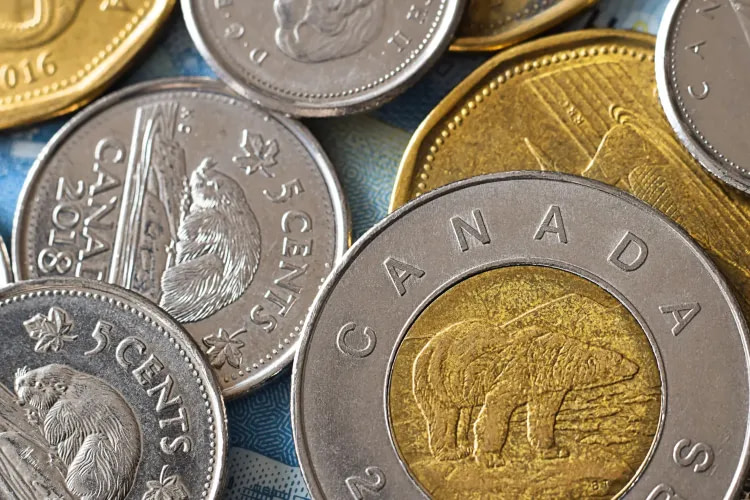
Article title: 13 Canadian Coins Worth Money
URL slug: canadian-coins-worth-money
Meta Description: There are several Canadian coins worth money. Collectors from all over the world admire these coins due to their design and cultural significance.
13 Valuable Canadian Coins
Canada has a variety of coins that represent the remarkable moments throughout its history. Some of these coins are worth a decent amount, making them quite attractive among collectors.
Whether you are searching for your first pieces, or you have developed a large collection, learning about different types of coins is valuable.
Understanding what determines a coin’s worth can help inform purchasing decisions. In this article, we will highlight 13 Canadian coins, their appearance, what makes them valuable, and how American Hartford Gold can help you diversify your portfolio with precious metals.
1. The 1921 50-Cent Coin
The 1921 50-cent coin is often described as the “King of Canadian Coins.” This is due to its rarity and historical significance. It features a simple design, with King George V on the front. During 1921, the Royal Mint in Ottawa produced very few 50-cent coins, and most of them were reportedly melted down when demand was low.
The few that still exist are either owned by private collectors or displayed in museums. These pieces can command high levels of attention when put up for auction, attracting eager collectors from all over the world.
The majority of the 1921 50-cent coins still in circulation are well-worn since the few still around have touched many hands. However, even heavily used metals can be valuable, especially if they portray significant historical moments. Unsurprisingly, this coin’s story has made it quite famous among collectors.
2. The 1936 Dot Penny
The 1936 Dot Penny is one of Canada’s most famous coins. Towards the end of 1936, the Royal Canadian Mint struck only a limited number of 1936 pennies — all marked with a small dot below the date to indicate they were produced in 1937.
This dot acts as an identifier, helping to differentiate these coins from those made earlier that same year. Since very few were minted, these pennies hold a lot of value. The exact number of 1936 Dot Pennies that remain in circulation is unclear, but it is estimated that only a handful were released.
Most were believed to have been destroyed, leaving fewer than a dozen known in the collecting world today. Pieces that have been verified as authentic are a wonderful addition to any precious metals portfolio.
3. The 1948 Silver Dollar
In 1948, Canada needed to update the back side of its coins to highlight India’s independence from Britain. Unfortunately, there was a delay in preparing the new dies, so not as many 1948 coins could be produced. The 1948 Silver Dollar stands out because it is not easily acquired, and collectors aim to purchase unique pieces.
The coin features King George VI on the front and a voyageur scene on the back. Due to various political and logistical issues, the 1948 Silver Dollars were not minted in large amounts.
The Mint didn’t have enough time to produce the quantity of coins that would meet circulation demands. Since these pieces have always been rare, collectors have treasured them for a long time. As a result, most of these silver dollars that surface are found in very good condition, with uncirculated coins worth more.
4. The 1911 Canadian Silver Dollar
The 1911 Canadian Silver Dollar, often referred to as the “Emperor of Canadian Coins,” has only two silver specimens and a handful of lead trial strikes that are confirmed to exist. This coin was initially proposed as Canada’s first silver dollar but never made it to circulation. The project was eventually abandoned, leaving behind only a few test pieces.
Since so few exist, these coins are almost priceless, and they rarely enter the public market. This makes them very difficult to acquire. One of the silver specimens is held in the National Currency Collection in Ottawa, and the other has appeared at auctions over the years, commanding large bids each time.
Collectors are intrigued by its design — which features King George V — because it was never fully pushed into circulation. Their rarity alone makes them an important part of history, but the fact that they were not fully circulated adds to their appeal.
5. The 1969 Large Date 10-Cent
The 1969 Large Date 10-cent coin is unique because of its font. At first glance, this dime looks similar to most others, but the difference lies in the size and style of the numbers.
For years, collectors overlooked these differences, so the coins didn’t get much recognition. Today, they are widely recognized as an important part of Canadian coin history.
Since there aren’t many available, even pieces in poor condition garner interest. To understand the difference between the 1969 Large Date dime and standard dimes, it is necessary to inspect the digits in “1969.” The “6” and “9” on the large date coin appear bolder and more spread out.
This detail is subtle, which is why it went unnoticed for so long. Additionally, fakes are sometimes made by altering regular dimes to mimic the larger font. For this reason, collectors often rely on third-party companies to confirm authenticity and grade.
6. The 1987 Loonie
When Canadians reference their one-dollar coin, they call it the “loonie.” This is because of the loon found on its back side. First introduced in 1987, the loonie was a replacement for the paper dollar bill, which drastically changed how Canadians navigated everyday transactions.
The coin’s design was initially intended for a different coin pattern, but the original dies were lost in transit — the details of how this happened are unknown. The Royal Canadian Mint chose the loon to avoid potential counterfeiting. Despite it being quite common, the first-year issue of the 1987 Loonie is one that many collectors wish to add to their collection.
The introduction of The 1987 Loonie represented a major financial transition in Canada. Paper dollar bills slowly faded out of production, forcing the public to adapt to carrying more coins with them to complete their daily purchases. Over time, Canadians grew to appreciate the coin’s durability and design.
The loon, a staple of Canada’s natural scenery, added a sense of identity to the nation’s currency. This legacy continues today, with the loonie remaining a highly recognizable coin in Canadian commerce.
7. The 2007 Million Dollar Coin
The 2007 Million Dollar Coin was crafted from 99.999% pure gold and originally held a face value of one million Canadian dollars.
However, it was eventually determined to be worth much more than that. Only a small number of these coins were minted, and they weigh around 100 kilograms each. Their size and value have even earned them a place in the Guinness World Records.
These coins feature Queen Elizabeth II on one side and a cluster of maple leaves on the other. Each coin also has a polished proof-like finish, which shows off the Mint’s precision. Because of their exclusivity, 2007 Million Dollar Coins are primarily found in the hands of select private collectors or museums. It would be rare to find one being sold at an auction.
8. The 2004 Lucky Loonie
The 2004 Lucky Loonie was born from a Canadian superstition tied to the nation’s Olympic ice hockey teams.
During the 2002 Winter Olympics in Salt Lake City, a Canadian icemaker secretly placed a loonie at center ice, and both Canadian men’s and women’s hockey teams won gold medals. This story captured national attention, and the Royal Canadian Mint began releasing “Lucky Loonies” to commemorate future Olympic events.
The 2004 edition is especially significant as it is one of the earliest official releases since this tradition began. Many Canadians collected them as good-luck charms. They aren’t particularly rare compared to other coins, but the 2004 Lucky Loonie has immense sentimental value. The design consists of the loon and a special Olympic logo, which serves as a symbol of national unity through sports.
Over the years, the Lucky Loonie concept has expanded, with new releases for various Olympic Games. Collectors who have a deep appreciation for sports memorabilia often pair these coins with tickets, jerseys, or autographed items. The 2004 Lucky Loonie began what is now considered a cherished national tradition. Olympic fans continue to look forward to each new Lucky Loonie release, keeping the spirit alive.
While some coins are treasured solely for their metal content or rarity, others, like the Lucky Loonie, are loved because of their emotional meaning. For collectors or beginner hobbyists who enjoy Canadian hockey or national lore, the 2004 Lucky Loonie is a must-have piece.
9. The 1906 Small Crown 25-Cent Coin
The 1906 Small Crown 25-cent coin is another interesting Canadian coin. There are both “small crown” and “large crown” versions, with the small crown variety being more difficult to come by. Although the differences in the crown design on the back of the coin are minimal, every detail affects the coin’s collectability.
These coins were widely circulated, meaning well-preserved pieces are few and far in between. To identify these coins, collectors must inspect the crown’s width and design closely. Since this variety was not well-documented at the time, collectors only discovered it through the in-depth study of minted coins.
Over the years, the 1906 Small Crown has gained recognition for its uniqueness. Coins with little to no wear, striking details, and their original luster are very popular in the coin-collecting world. The design is so subtle, some remark that finding one feels like uncovering a hidden treasure.
10. The 1858 Province of Canada Cent
Before the Confederation in 1867, several provinces issued their own coins, and the 1858 Province of Canada cent is among the most notable. The coin was struck with the goal of facilitating commerce in what is now known as Ontario and Quebec. It helped bridge the gap between British and American currency systems.
This large bronze penny, featuring a portrait of Queen Victoria on the front, is an important part of history because it is one of the earliest official Canadian coins. Over time, many of these were either lost or pushed into circulation, leaving those with less wear to be sourced as collectibles to preserve their integrity.
Since this coin predates Canadian Confederation, the 1858 cent offers a glimpse into the colonial era. Collectors appreciate the coin for the role it plays in bringing regional markets together and laying the foundation for future Canadian currency.
High-quality pieces, especially those with clear details on the wreath and queen’s hair, attract a lot of attention.
11. The 1935 Silver Jubilee Dollar
In 1935, Canada introduced its first commemorative dollar. It was designed to honor King George V’s Silver Jubilee, marking 25 years on the throne. This coin is significant not only for this reason but also for pioneering a new tradition in Canada, encouraging the country to embrace commemoration more.
The front of the coin shows King George V, while the back of the coin displays a voyageur scene with the date “1935” and the words “CANADA” in all capital letters. The fact that this coin was not produced in large quantities and boasts a unique design quickly made it a favorite among collectors. Over the years, it has gained value both monetarily and historically.
For many collectors, the 1935 Silver Jubilee Dollar represents a turning point in Canadian coin production. The voyageur motif, which was later printed on other silver dollars, symbolizes the nation’s fur-trading past and its association with rugged exploration. Collectors find well-preserved silver dollars to be particularly desirable.
12. The 1973 Large Bust Mountie Quarter
In 1973, to celebrate the 100th anniversary of the Royal Canadian Mounted Police (RCMP), a special quarter was released featuring a Mountie on horseback. During production, two designs for the front of the coin were circulating: a small bust of Queen Elizabeth II and a large bust version.
The large bust variety is the rarer of the two, making it one that many collectors would like to get their hands on, especially those who enjoy the art of subtle design changes across coins. This design difference was not very well publicized during the time. Their appeal comes from the unique design and the connection to the Royal Canadian Mounted Police (RCMP).
Identifying the large bust variety requires comparing the size and positioning of the Queen’s portrait to the rim of the coin. Collectors often use calipers or magnifying glasses to verify the differences in a coin’s dimension. Over time, some of these pieces have been incorrectly labeled or overlooked, which has caused some confusion over the years.
Since the large bust quarters are limited, those who hold coins of this variety, especially those that are in excellent condition, are quite lucky. This coin appeals to collectors who find joy in discovering hidden details on widely circulated coins.
13. The 1992 Provincial Quarters With Errors
In 1992, the Royal Canadian Mint released a set of quarters intending to honor Canada’s provinces and territories for the 125th anniversary of Confederation. Each quarter featured a specific provincial or territorial emblem. While most coins were pretty standard at first, errors and misprints ultimately emerged, leading to an unexpected surge in interest among collectors.
These errors included off-center strikes, double dies, and missing elements in the design. Error coins have always been intriguing to collectors as they are rare and add a certain charm. Collectors often hunt specifically for these error quarters in coin rolls and circulation, hoping to stumble upon one by chance.
Identifying an error coin typically requires magnification and a thorough knowledge of the original design. Errors can range from barely noticeable mistakes to glaring ones, which can drastically affect their value. In some cases, the story of how the error came to be is more appealing than the design itself.
The 1992 Provincial Quarters with errors celebrate Canada’s diverse regions, adding to their cultural significance.
How American Hartford Gold Can Help
Navigating the coin market can be difficult, especially as prices fluctuate and new coin discoveries come to light. Working with a trusted partner helps you make informed decisions about buying, selling, and protecting your precious metals purchases.
American Hartford Gold, is committed to client education and transparency. We offer valuable insights and portfolio diversification strategies like our Gold IRA, for example.
We understand that each collector has unique goals in mind, so whether you’re looking to acquire more rare coins, or you’re just curious about what the world of precious metals has to offer — we’d love to help.
Sources:
Loonie: Meaning, Overview, Role in Economy | Investopedia
How Canada Broke Its Gold Medal Curse With A Little Luck In 2002 | The Hockey News


