











- BRICS nations are advancing a payment system that could reduce global reliance on the U.S. dollar.
- A shift away from dollar-based trade may weaken purchasing power and increase long-term inflation risks.
- Physical gold can help protect your finances from the most severe consequences of de-dollarization.
A Dangerous Shift in Global Finance
What happens to your retirement savings if the world stops needing the dollar?
The question is no longer theoretical. Later this year, India will chair the 2026 BRICS summit in New Delhi. They are set to formally propose a new cross-border payment system. It would let member nations trade and settle transactions entirely without the U.S. dollar.1
Backed by a bloc representing over 40% of global GDP by purchasing power parity and nearly half of the world’s population, the plan carries significant global weight.2 It could fundamentally reshape the financial world your retirement depends on.
What India Is Proposing — And Why It’s Different
India’s proposal did not emerge in isolation. It builds on the 2025 BRICS summit in Rio de Janeiro, where leaders advanced plans to accelerate de-dollarization.3
4
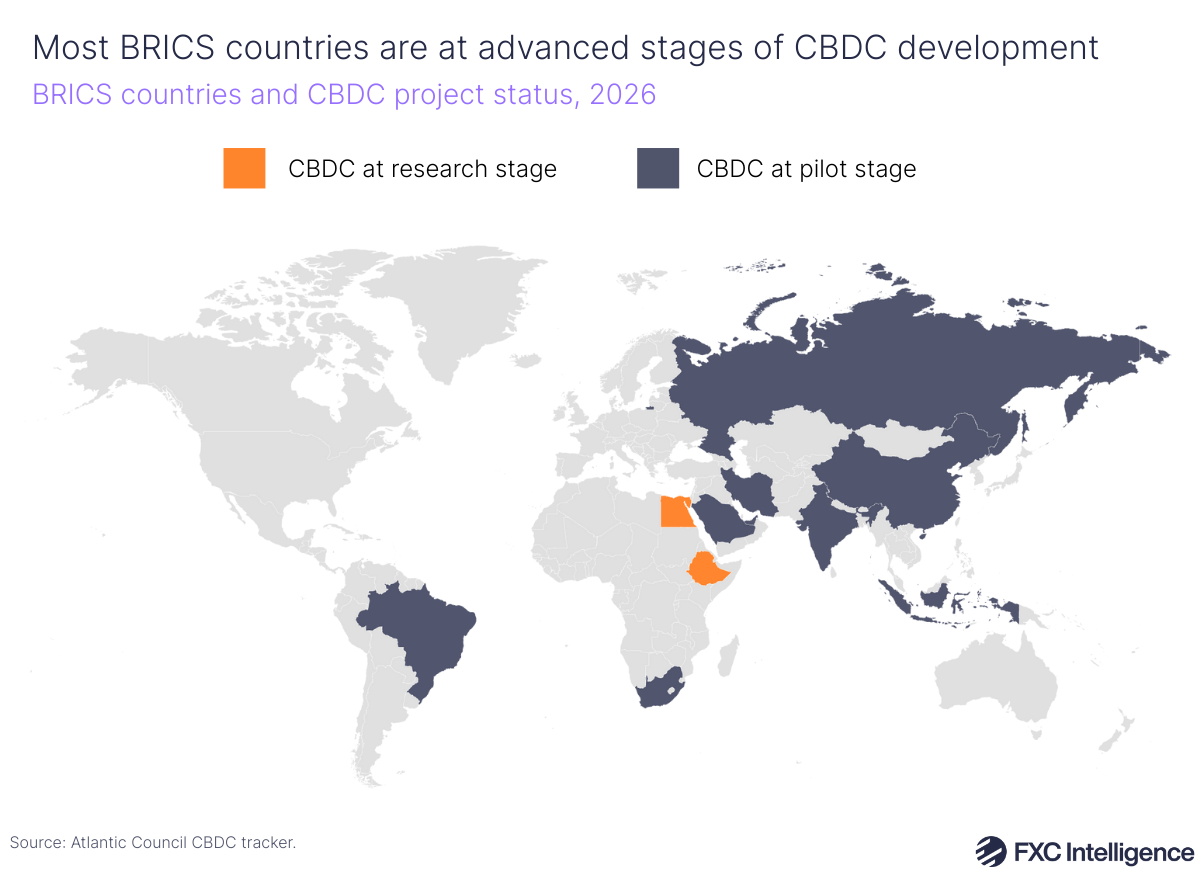
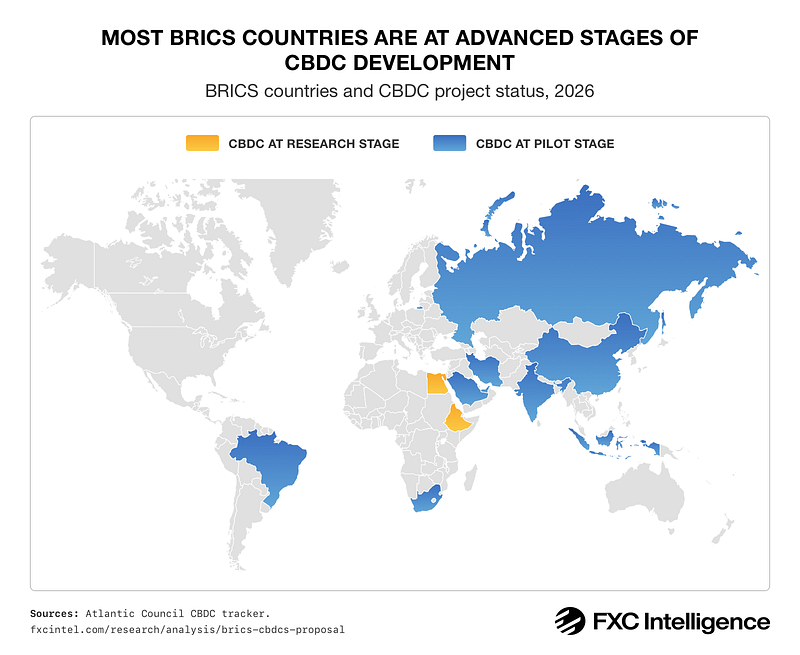
The Reserve Bank of India wants to connect BRICS digital currencies into a unified system. They aim to speed up cross-border payments for trade and tourism. At the same time, it would give member nations a practical alternative for settling trade outside the dollar.
It is being compared to Brazil’s existing PIX system, a real-time digital transfer network that moves money instantly between people, companies, and governments. Only now picture it scaled up across 10 nations and trillions of dollars in annual trade. 5
Though quiet, the threat to the dollar’s value could be profound. Such an infrastructure shift can allow global trade to simply move around the dollar, reducing its role without ever directly confronting it.
The Dollar’s Vulnerability Is Real
For decades, the U.S. dollar’s dominance has rested on a simple reality: almost all global trade is priced and settled in dollars. It created constant worldwide demand for the currency, which supports its value, keeps inflation in check, and allows the U.S. to borrow cheaply. Strip that away, and the foundation shifts.
The majority of trade is still denominated in U.S. dollars. But that is changing quickly. Intra-BRICS trade reached $1.17 trillion in 2024, representing 13-fold growth since 2003. China and Russia have already moved roughly 90% of their bilateral trade to local currencies, primarily yuan and rubles. 6
President Trump has threatened BRICS nations with steep tariffs if they pursue de-dollarization. But China is offering zero-tariff policies for less developed countries as a counter. The result is growing global trade uncertainty as economic alignments shift and change over time.
Meet “The Unit” — BRICS’ Test Currency
In a groundbreaking initiative, the BRICS nations launched a working prototype of a gold-backed digital currency callecd “The Unit” in December 2025.
Each Unit is pegged to 1 gram of gold, with reserves comprising 40% gold and 60% BRICS currencies. It isn’t a consumer currency. It is designed to let BRICS nations price and settle deals in something other than dollars. The gold anchor is deliberate: it gives the instrument credibility that purely fiat alternatives lack. 7
BRICS and Gold
BRICS nations have been quietly stockpiling the asset that thrives when dollar confidence erodes. Between 2020 and 2024, BRICS+ central banks accounted for more than 50% of all sovereign gold purchases globally. They’re building the reserves that can support a different kind of financial system.
There is a clear reason behind it. As BRICS countries develop new payment systems and explore gold-backed mechanisms, gold serves a unique role. It does not rely on any single nation’s credit or policy. It holds value across currencies and political systems, which makes it a natural anchor during periods of financial transition.
The Unit and the CBDC payment bridge are two pieces of the same puzzle. Together, they represent a comprehensive, ground-up effort to make the dollar optional, then unnecessary, for a bloc representing nearly half of humanity.
Conclusion
Change happens slowly, then all at once. The looming impact of de-dollarization isn’t abstract. Import prices will rise. Inflation will increase. The purchasing power of dollar-denominated assets such as stocks, bonds, and cash savings can erode. For Americans approaching or in retirement, the risk is real.
For those thinking long-term, preparation is key. As the BRICS pursue gold-backed frameworks, demand for gold rises, putting upward pressure on prices. Physical precious metals held in a Gold IRA can help protect the value of your savings from a changing world order, one where the dollar’s role is no longer guaranteed.
The BRICS summit is coming. The proposal is on the table. The pilot currency is already running. Don’t wait for the shift to prepare for it.
Call American Hartford Gold at 800-462-0071 today to learn how a Gold IRA can help secure your financial future.