







- Consumer spending rose in May, although inflation erased much of the real gain.
- Many Americans remain worried about the high cost of living despite stronger headline data.
- Physical gold in a Gold IRA can help protect purchasing power when the dollar buys less.
Spending More, Feeling Worse
Americans are spending more. Many do not feel better off.
The Bureau of Economic Analysis reported that personal income rose 0.7% in May 2026. Personal consumption expenditures also rose 0.7%. At first glance, those numbers can make the consumer economy look strong.
The deeper numbers tell a more troubling story. Real personal consumption expenditures increased only 0.3%, while the PCE price index rose 4.1% from a year earlier. Core PCE, which excludes food and energy, rose 3.4%, its highest level since October 2023.1
Real purchasing power is what determines living standards. When spending rises faster than buying power, households can spend more money without feeling any richer. Stronger spending numbers do not automatically mean stronger households.
For many Americans, the economy looks better in the data than it feels at the checkout line.
The Inflation Trap
Inflation creates a trap that hides in plain sight because it is more than a pricing problem. It is a purchasing-power problem. People spend more money without getting more value.
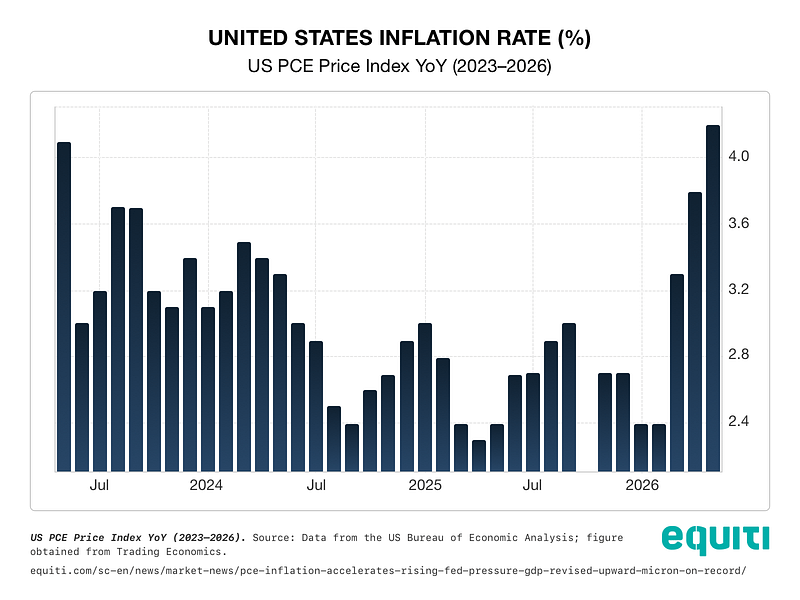
The BEA’s May report captured that pressure clearly. Current-dollar personal consumption expenditures rose $156.1 billion. Real PCE, adjusted for price changes, rose only $43.8 billion. Nominal spending increased nearly four times faster than actual buying power.3
The paycheck may look larger. The bills look larger too. The result can feel like standing still while paying more to do it.
Consumers Still Feel Strained
Consumer sentiment shows how deeply the cost-of-living problem is being felt.
The University of Michigan’s consumer sentiment index improved in June, yet households remained concerned about high prices. More than half of consumers spontaneously mentioned high prices as hurting their personal finances for the third straight month.
Many Americans are still spending because basic life has become more expensive. Rent, food, utilities, and transportation can keep moving higher even when wage gains appear in the data.
The headline economy and the lived economy can feel like two different realities.
Retirement Savers Face Pressure
Inflation can be especially damaging for retirees and those approaching retirement.
While workers can pursue higher wages, retirees depend on fixed income streams that can lose power faster than expected.
A retirement plan built around one cost-of-living assumption can become strained when inflation stays elevated longer than expected. Groceries, insurance, housing, and medical costs can all force retirees to draw more from savings than planned.
Higher inflation also complicates the Federal Reserve’s job. Core PCE remains well above the Fed’s 2% target, which can keep pressure on interest-rate policy. Higher rates can affect borrowing costs, stock valuations, bond prices, and retirement account performance.
Why Gold Matters Now
Physical gold fits into this conversation because the core problem is purchasing power.
Gold cannot be printed by the Federal Reserve, does not depend on corporate earnings, and carries no credit risk. The World Gold Council notes that gold has outpaced U.S. and global consumer price indices since 1971.4
For savers worried about inflation, gold’s history carries an important lesson. It gives households a way to hold part of their wealth in a physical asset that helps preserve value when paper money weakens.
Gold should be viewed as part of a broader diversification strategy. Its role is protection, not prediction. Savers cannot control inflation data, Fed policy, or the next market shock. They can control how exposed their savings are to a dollar that keeps buying less.
Protecting Purchasing Power
For retirement savers, the key question is not only how much money they have. The real question is what that money can still buy five, ten, or twenty years from now.
If inflation continues to erode the dollar’s purchasing power, diversifying part of a portfolio into physical precious metals can help add protection. A Gold IRA allows retirement savers to hold physical gold inside a tax-advantaged retirement account, combining the long-term role of precious metals with the structure of a retirement vehicle.
If you want to protect your portfolio with physical precious metals in a Gold IRA, contact AHG today at 800-462-0071.