












- AI-linked stocks sold off sharply as investors questioned whether the market has priced in too much future growth.
- Rising rates, stretched valuations, and aggressive earnings forecasts are increasing pressure on high-growth technology stocks.
- A Gold IRA can help protect your finances from market concentration, inflation, and paper asset volatility.
AI Expectations Get Reality Check
Artificial intelligence has been the market’s biggest story, but the latest selloff showed how quickly confidence can crack. AI-linked stocks pushed the Nasdaq sharply lower as investors questioned whether prices reflect a future that may take longer to arrive.
For Americans saving for retirement, the answer matters because a 401(k) or IRA can have heavy exposure to the large technology companies driving the major indexes.
The Market Gets Nervous
AI is already changing how companies work. The risk is whether current stock prices assume years of flawless growth, massive profits, and endless demand.
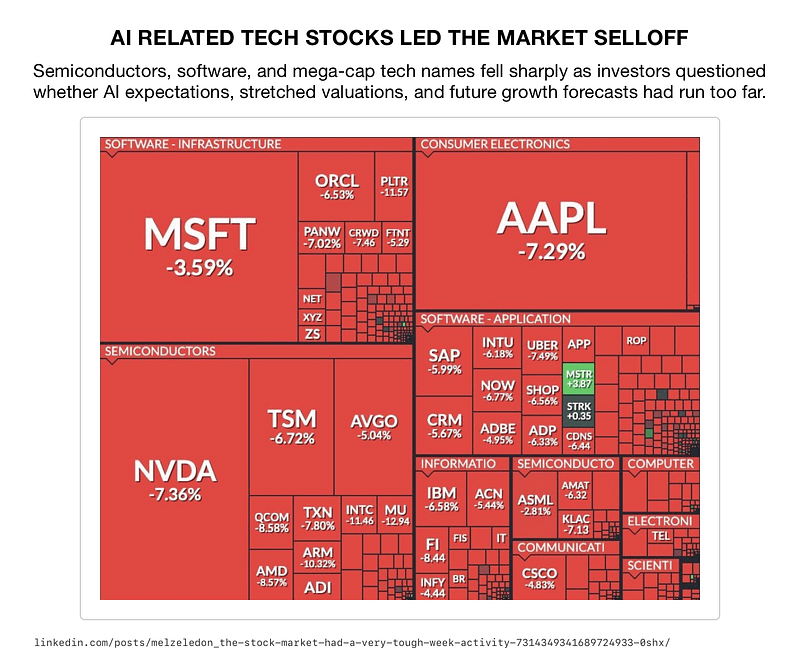
The decline hit the companies most closely tied to that hope. Reports cited a 4% one-day drop in the Nasdaq. More than $650 billion was erased from the value of major U.S. chip companies. This pullback stood out because chipmakers, cloud giants, and data center companies had carried much of the market’s optimism. When the strongest names fall together, investors start questioning the foundation beneath the AI rally.2
Valuations Need Perfection
Stubborn inflation is keeping rates elevated and reviving talk of future hikes. Futures markets recently priced more than 60% odds of a rate hike by year-end, adding pressure to stocks already priced for aggressive growth.3
High-growth stocks often depend on earnings expected years in the future. Those profits look more valuable when interest rates are low. When rates rise, the math changes. Put simply, a dollar promised far in the future is worth less when investors can earn more money safely right now. Higher bond yields make future earnings less attractive. They force investors to reconsider how much they are willing to pay today.
AI valuations have been stretched by enthusiasm, not just current profits. Broader market valuation gauges are also flashing caution. The Buffett Indicator recently showed total U.S. stock market value at more than 230% of GDP. The Shiller CAPE ratio and the S&P 500 price-to-sales ratio also point to historically high prices for stocks. For AI stocks, that creates added risk because many are still priced on revenue and profits that may not arrive for years.4
Earnings May Disappoint
Another warning sign is the gap between forecasts and reality. Analysts often expect companies to grow faster than they actually do. One analysis found that long-term earnings forecasts for S&P 500 companies have historically averaged about 13% growth, while actual growth has been closer to 7%. Expected long-term S&P 500 earnings growth recently hit 20.2%, above the 18.6% high reached during the dot-com bubble. Concerns are rising once again that stocks are being priced for growth that might not happen.5
The payback question is becoming harder to avoid. If companies are spending trillions of dollars to build AI infrastructure, investors eventually need to see the return. AI must prove it can turn massive spending into real profits, not just bigger forecasts.
The 1999 Comparison
The dot-com comparison keeps coming up because the pattern feels familiar. In the late 1990s, the internet was real and transformative. Many internet stocks still collapsed because investors paid too much, too early, for growth that took years to become profitable.
AI may follow a different path, but the lesson still applies. A powerful technology can change the world while overvalued stocks disappoint investors. The danger comes when markets treat a promising future as a guaranteed present.
Retirement Risk Is Real
Many retirement savers may have more AI exposure than they realize. Index funds, target-date funds, and large-cap growth funds can be heavily influenced by a small group of technology stocks. When those names rise, account balances look strong. When they fall, the same concentration can cut the other way.
A bubble can hurt investors before it fully bursts. Valuations can compress gradually. Earnings estimates can drift lower. Higher rates can keep pressure on stocks. A disappointing quarter from a market leader can ripple across portfolios.
Physical gold offers a different kind of protection because it is not tied to a company’s earnings forecast, data center budget, or Wall Street growth model. Gold has been used for generations as a hard asset during periods of inflation, uncertainty, and market stress.
Conclusion
AI may remain an important force in the economy, but the recent selloff exposed how fragile the trade can become when prices are built on perfect expectations. Americans do not have to abandon growth to recognize concentration risk. They can balance paper assets with something physical, durable, and historically recognized as a store of value.
If you want to learn more about protecting your savings or retirement funds with physical precious metals in a Gold IRA, contact American Hartford Gold today at 800-462-0071.


