






Silver’s Volatility Explained
Silver has had a dramatic run over the past year. Prices surged rapidly, briefly reaching around $120 per ounce before pulling back sharply in recent weeks.
Silver is well known for its volatility, often producing powerful rallies followed by steep pullbacks. While the recent decline has unsettled some investors, many analysts say it does not necessarily signal the end of the broader trend. Despite the turbulence, analysts believe silver still has room to run and could remain a valuable component of a diversified portfolio.
A Major Break Above $50
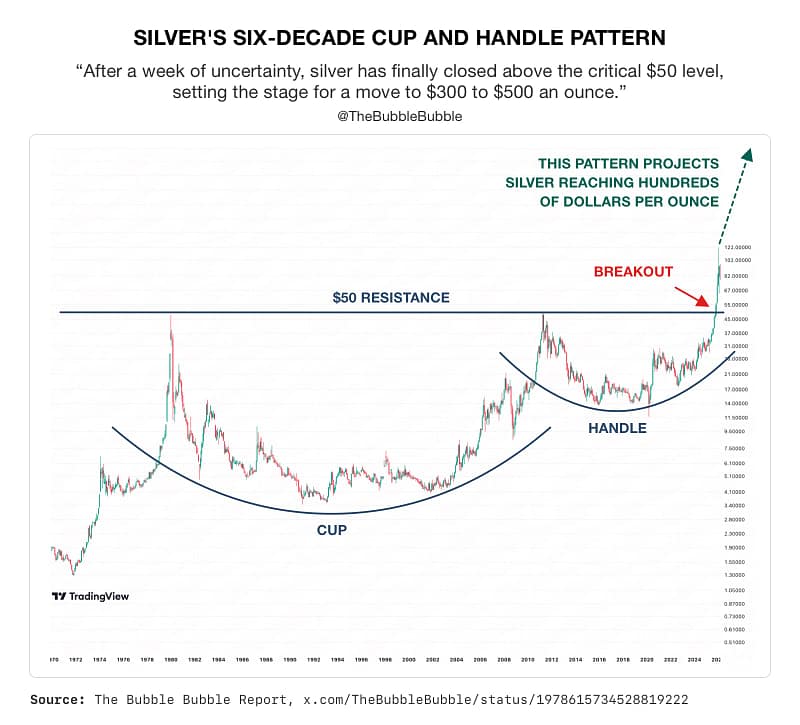
Part of that view comes from the long-term structure of the silver market. For decades, silver struggled to break above $50. Silver tested that ceiling during rallies in 1980 and again in 2011 but failed to stay above it. When the metal finally broke through $50 in 2025, it signaled the start of a new cycle.
Over several decades, silver prices formed what analysts call a cup-and-handle pattern, a chart formation that often signals a long-term breakout and the start of a sustained upward trend.
1
The peaks in 1980 and 2011 formed the cup. Consolidation from 2011 through 2025 formed the handle. When silver broke out above $50 last year, the move triggered a powerful rally that eventually carried prices toward $120.
Technical indicators reached levels last seen during the 1980 silver spike. Many analysts believe the current pullback is simply the market cooling down after an unusually fast climb. They view $50–$60 as a key long-term support zone. As long as silver holds above those levels, the broader bullish structure remains in place.
The Economic Forces Behind Precious Metals
The economic backdrop may also support precious metals in the months ahead. One major factor is the surge in global energy prices. Brent crude oil has recently climbed above $100 per barrel. Historically, spikes in energy prices tend to push inflation higher across the economy. When inflation rises and currencies lose purchasing power, investors often turn to hard assets like gold and silver to help preserve value.
Higher inflation can complicate monetary policy. If price pressures stay elevated, the Federal Reserve may delay cutting interest rates. And higher borrowing costs can reduce short-term demand for precious metals.
However, the recent rally in silver occurred while interest rates were already high. Many economists still expect rate cuts later in the cycle. When those cuts eventually arrive, lower borrowing costs could provide another tailwind for precious metals.
Financial conditions have also been tightening. Measures such as the Chicago Fed’s National Financial Conditions Index show credit becoming more restrictive. While freight shipment data suggests economic activity may be slowing. When inflation risks rise as economic growth weakens, markets often enter a difficult environment. Precious metals have historically performed well during periods like this.2
Why Silver Can Move So Dramatically
Even with those pressures, many analysts believe the recent drop in silver reflects consolidation rather than a collapse in the market.
Silver is unique among precious metals because it serves both as a monetary metal and an industrial commodity. It is widely used in electronics, solar panels, and industry. That dual role often amplifies price movements, producing sharp rallies followed by equally sharp corrections.
At the same time, the supply side of the market has been tightening. The global silver market has recorded supply deficits for six consecutive years as industrial and investment demand continues to grow. That imbalance has helped create a price floor for the metal.3
Some analysts believe silver may now be building a base before its next major move higher.
Rashad Hajiyev, founder of RM Capital Consulting, said, “The global economic and geopolitical background is very bullish for precious metals. Once silver is done with consolidation, another even stronger leg up will follow.”4
Price targets vary widely, but several forecasts suggest silver could eventually reach $140 to $150 if the next upward phase develops.4
Conclusion
Silver’s recent pullback comes after an unusually fast rally. It now appears to represent another stage in a larger bull cycle that began when silver finally rocketed through the $50 ceiling. The metal’s long-term technical structure, ongoing supply deficits, and supportive economic conditions continue to point toward higher prices over time.
For many Americans, silver can continue to play an important role alongside gold in helping protect the value of retirement assets. If you want to learn more about securing your retirement portfolio with a Gold IRA, call American Hartford Gold at 800-462-0071 today to speak with a specialist.