















-
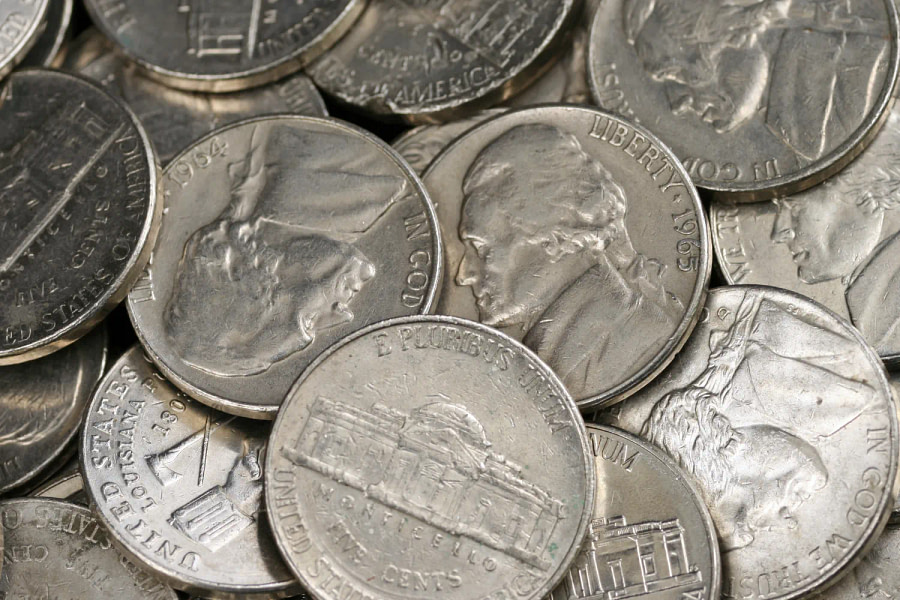
Valuable nickels tend to stand out because they’re rare, well-known, or in excellent condition, causing collectors to actively seek them.
-
The quickest way to determine a nickel’s value is to inspect the date and mint mark, and verify whether the coin is a recognized variety.
-
If a nickel appears valuable, compare it to reference photos from reputable sources and consider having it professionally authenticated.
Certain nickels, in the right condition, can be valuable. For some, it’s because they’re rare. For others, it’s because of a production mistake that made them a recognized variety. Dies may strike coin planchets incorrectly, and while not every production issue produces a high-demand variety, some do.
Learning about the different types of nickels and what to look for while evaluating them will help you determine which coins are worth money. In this guide, you’ll learn about five nickels worth money that collectors often seek out, how to identify each one, and the precious metals American Hartford Gold has to offer.
1. 1913 Liberty Head Nickel
The 1913 Liberty Head nickel is one of the most famous U.S. coins and is very rare, making it valuable. This coin wasn’t produced for the general public, and only a small number are known to exist. That rarity makes it highly sought after by collectors.
If you ever come across a coin with the date “1913” that has the Liberty Head design, you should set it aside just in case. The chances of finding one of these nickels are low, but never impossible. It’s also important to note that since this coin is so widely recognized, it’s also frequently faked.
Counterfeiters often alter dates on existing coins, create replicas of their own, or try to pass off novelty pieces as authentic. A real 1913 Liberty Head nickel should match known characteristics about the coin, and if you’re considering a purchase, ask the seller for their authentication paperwork.
How To Identify a 1913 Liberty Head Nickel
A Liberty Head nickel has Lady Liberty on the front and a large “V” on the back. Don’t assume the coin is real based solely on the date. Take clear photos, including close-ups of the date, lettering, and the coin’s rim. Compare the coin’s appearance to reputable source photos to confirm.
The 1913 Liberty Nickel is also a high-risk item for counterfeiting. If you believe yours is authentic, don’t clean, polish, or test it in a way that could damage the surface . Instead, you should seek out professional verification through a reputable company. If the coin is real, a specialist can confirm it.
2. 1918/7-D Buffalo Nickel Overdate
The 1918/7-D Buffalo nickel overdate is a variety that collectors love for its historical significance. An overdate happens when a die shows traces of one year under another, creating a “ghost” of the earlier number. In this case, the “7” from 1917 appears beneath the “8” in 1918, and the effect is visible even without advanced equipment.
Collectors consider it one of the most important Buffalo nickel varieties. It’s also quite rare, so a true overdate would earn a fair amount of attention. The “D” mint mark means it was produced in the Denver Mint. This variety shows up in circulated pieces, but examples in better condition are much tougher to find and more desirable as a result.
How To Identify a 1918/7-D Buffalo Nickel Overdate
Look closely at the “8” in 1918 and check for the “7” beneath it. Reputable guides provide diagnostics you can compare your coin to. If the coin appears to have a clear extra line or curve that forms a “7,” compare it to a reference photo from a recognized source.
The mint mark should be a “D” and look natural. Be wary of coins that appear too perfect or ones with strange-looking surfaces, since counterfeit pieces are common. If your coin appears to be genuine, consider professional attribution to confirm.
3. 1937-D “Three-Legged” Buffalo Nickel
The 1937-D three-legged Buffalo nickel is one of the most famous nickels. On the back, the buffalo appears to be missing one front leg, which stands out right away. This variety exists because the die was excessively polished, removing part of the leg detail during production.
Collectors like this coin because it’s unique, recognizable, and tied to a specific mint and year. The “D” mint mark connects the piece to the Denver Mint. Many individuals first learn about coin varieties with this nickel because its production mistake is easy to identify.
Despite the coin’s fame, condition still matters. A clearer, sharper three-legged Buffalo nickel tends to attract more interest. Buffalo nickels also commonly show marks and wear because of how they circulated and were stored before being released to the public.
That means two authentic three-legged nickels can have very different market outcomes. If you have a 1937-D Buffalo nickel, don’t assume it’s the three-legged variety until you confirm the missing leg detail using a reputable source. Additionally, many standard 1937-D nickels still exist, and the leg should be present on those.
How To Identify a 1937-D “Three-Legged” Buffalo Nickel
Start by inspecting the buffalo’s front legs on the back of the coin. On the three-legged variety, one front leg is missing, but you can often still see part of the hoof area. Compare your coin to reference images from a reputable grading service that provide a detailed view of the missing leg.
If the leg looks weak but isn’t missing entirely, you may be looking at normal wear, not a variety. True three-legged coins have a clear absence in die polishing. It should also still look like a normal 1937-D Buffalo nickel across all other design elements.
If the surface looks unusual, the coin is bent, or details appear tampered with compared to reference photos, you could be dealing with a fake. If your coin appears to be authentic, keep it and consider a professional evaluation. Verification can help you avoid sales disputes.
4. 1950-D Jefferson Nickel
The 1950-D Jefferson nickel is considered a key date in the Jefferson series. Its reputation stems from its low mintage compared to other Jefferson nickels. Since collectors understood its value early on, many high-grade pieces were saved. This coin is also popular because it’s easier to identify than some other varieties.
You only need to confirm the date and the “D” mint mark. Condition and strike quality still matter, however, and many collectors will pay more for well-struck examples. On Jefferson nickels, a common strike detail collectors talk about is the steps above “MONTICELLO” on the back. Strong steps can indicate a sharper strike.
How To Identify a 1950-D Jefferson Nickel
First, confirm the 1950 date and “D” mint mark. Then evaluate the coin’s wear. If Jefferson’s hair and cheek area appear flat and the lettering is softer, the coin is circulated and typically will not be worth much. If the coin looks crisp with fewer marks, it may be more desirable. Jefferson nickels often have contact marks, so a clean surface will go a long way with buyers as well.
Next, check the back of the coin for strike quality. Look at “MONTICELLO” and the steps area at the base. A coin with clear separation between the steps stands out, especially to collectors building high-grade sets. Don’t assume a coin has “full steps” without comparing it to examples from reputable grading services, as standards are often strict.
5. 1964 Special Mint Set Jefferson Nickel
The 1964 Special Mint Set Jefferson nickel is one of the most intriguing modern-era rarities. It carries a distinctive special-strike look that distinguishes it from standard circulation coins, with sharper detail and better surface quality. Collectors often describe the finish as satin-like, and the edges can appear more square and crisp than standard strikes.
Rarity is part of the appeal here, since major grading services report that only a small number of these nickels are known. A rare special-strike coin from the 1960s can earn more collector attention than many older nickels in worn condition. Many people mislabel shiny or well-preserved 1964 nickels as special strikes when they’re not.
How To Identify a 1964 Special Mint Set Jefferson Nickel
A special-strike Jefferson nickel typically has a smooth, satin-like finish and sharper, more intentional-looking details than a standard circulation strike. The rims and edges may appear more squared-off, which can be a noticeable difference when compared side by side with a regular 1964 piece.
Compare your coin to references offered by reputable grading services. If it seems to match, professional grading is often the next logical step since the market relies heavily on authentication, especially for this coin type. A certified coin is easier to sell.
Increase Portfolio Value With Precious Metals
Valuable nickels, while many are quite rare and difficult to come by, do exist. Focus on dates, mint marks, and verified diagnostics to help establish authenticity. If you’re interested in learning how physical metal could add value to your portfolio, reach out to the American Hartford Gold team today.
With a Gold IRA , you can protect the value of your savings with gold pieces . This self-directed IRA is a popular choice due to gold’s safe-haven properties.
FAQs
What is the quickest way to see if a nickel might be valuable?
Check the date and mint mark first, then compare the design to a known nickel type like Liberty Head, Buffalo, or Jefferson. If it’s a Buffalo nickel, look for famous varieties like an overdate or missing leg. If it’s a Jefferson nickel, look for key dates and unusual finishes.
Should I clean a nickel before trying to sell it?
No. Cleaning can damage the surface and affect collector interest, even if the coin is brighter afterward. Buyers tend to prefer natural surfaces, even if they appear aged.
How do I know whether a variety is real or just damage?
Real varieties match known diagnostics from reputable sources. Damage is typically random, inconsistent, or harsh, like deep scratches or gouges. Compare your coin against photo references for more clarity and consider a professional evaluation if there’s a potential match.
Sources:
Can you spot the counterfeit coins and bars? | ACEF
Top 7 Ways to Ruin Your Coins | Spruce Crafts
Buffalo Nickel Key Dates, Rarities, and Varieties | Spruce Crafts