











Investors awoke on Tuesday morning to surprise news from Asia.
U.S. Federal Reserve Chair Janet Yellen said in a speech that the Federal Reserve was under “some threat” from political pressures at home. Gold was on the rise shortly after.
Is this so-called pressure a real threat, or is it instead an opportunity to rein in a central bank that is putting America at risk with constant meddling in the markets?
One bill making its way through Congress right now would limit our central bank’s independence and force it to follow strict policy guidelines for making interest policy. Many experts have been critical of the Federal Reserve’s recent experimentation in guiding economic results in the U.S.A. with tricks like quantitative easing. From now on, the bank would have to justify any extreme intervention or deviation from the rules.
Despite this public controversy, the Federal Reserve has actually been far more reserved than expected in 2017. Gold investors have been pleasantly surprised after bracing for an expected string of interest rate hikes that have been slow to come.
In fact, gold beat the pants off the Dow Jones and S&P 500 indexes in the first quarter of 2017.
While further rate hikes are certainly still possible for 2017, Yellen said that “appropriate stance of policy now is something close to neutral,” signaling that there less chance for rates to rise quickly in the near future. She was not terribly enthusiastic about economic growth, which has averaged just 2% in the recent economic recovery.
“It’s increasingly apparent that the Fed will not be very aggressive in removing monetary accommodation,” said Bart Melek, TD Securities’ global head of commodity strategy.
It could be ideal timing for gold at a moment when political uncertainty and military action are at increased levels across the globe.
MISSILE STRIKES RAISE THE STAKES OVERSEAS
Gold hit a five-month peak last week, rising more than 1 percent on safe-haven buying after the U.S. military launched cruise missile strikes against a Syrian air base controlled by President Bashar al-Assad’s forces.
“We expect gold to remain well supported amid geopolitical uncertainty,” UBS Bank said in a statement.
ANZ analyst Daniel Hynes thinks this latest foreign policy crisis clearly raises the stakes and he expects to see gold prices continuing to push higher in the short-term. Uncertainty in the markets had already risen as Trump met Chinese leader Xi Jinping for talks over flashpoints such as North Korea and China’s massive trade surplus with the United States.
Tensions with Russia are at their greatest since the end of the Cold War and significant geopolitical challenges threaten the world’s peace and prosperity.
Publisher of Trends Journal Gerald Celeste remains bullish on gold. Celeste believes that gold is the ultimate safe haven asset in times of geo-economics and geopolitical uncertainty, just like we’re in now. According to Celeste, gold is not an asset for quick trading for short term gains, but a safe-haven asset to hold long term.
Gold analyst Gary Wagner thinks gold’s downside potential is limited and the market has already factored in the expectations of any rate hikes this year. According to Wagner, the administration’s recent failure to push through healthcare reform has raised questions over its ability to deliver promised tax cuts and spending plans.
Interest in gold is also being supported by rising inflation across the globe. In Europe, inflation rose 2% in February 2017, the fastest increase in inflation since January 2013. The U.K. also saw inflation stand at 2.3%, reflecting the pound’s fall since the Brexit vote in June 2016. In the U.S., the Fed’s preferred gauge of inflation stood at 1.9% in the 12 months to January – only slightly below its target of 2%. Gold is a well-known hedge against inflation.
CHINA AND RUSSIA ATTEMPT TO BYPASS U.S. DOLLAR
Much of the fluctuation in precious metals recently has been driven by the U.S. dollar. Gold and the U.S. dollar tend to hold an inverse relationship over time. What would happen if the U.S. dollar is no longer the supreme world currency?
It isn’t just competing economies like China and Russia that want to see a weaker dollar. The Trump administration has signaled again and again that it would like to see a lower dollar to make U.S. manufacturing and exports more competitive overseas. In January, President Trump said the current strong dollar is “killing us.”
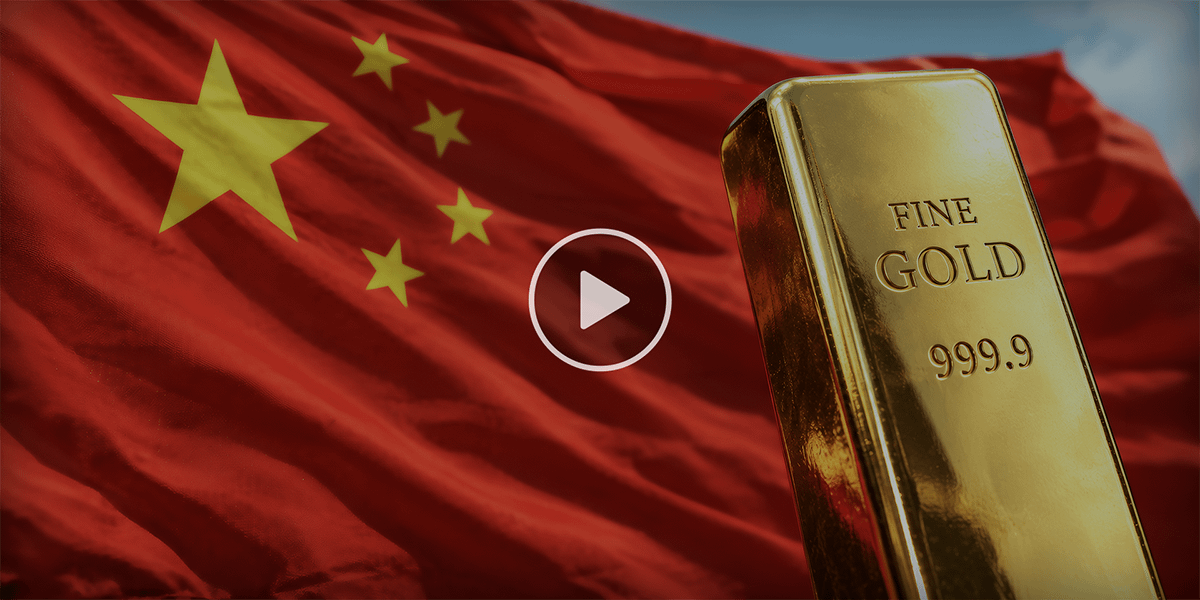
On March 14, 2017, the Russian central bank opened its first overseas office in Beijing, signaling another step forward in forging a Beijing-Moscow alliance to bypass the U.S. dollar in the global monetary system and to phase in a gold-backed standard of trade. Both superpowers seek stronger economic ties since the West brought sanctions against Russia over the Ukraine crisis and the oil-price slump hit the Russian economy.
If Russia is indeed planning to become a major supplier of gold to China, the probability that Beijing is preparing to unveil a gold-backed currency increases dramatically. Bypassing the U.S. dollar appears to be paying off. Bilateral trade between Russia and China grew 29.5%, reaching $3.41 billion.
The long-range implications of China and Russia shifting away from dollar-based trade are troubling but positive for gold over time.
PROTECT YOUR WEALTH TODAY AND SLEEP BETTER TONIGHT
With missile strikes overseas and stocks trading at stratospheric levels, owning physical gold is one of the few safe havens available if the markets experience a severe correction. Many investors overlook physical gold and silver, but this underappreciated asset class offers a level of safety, portability and diversification no paper-based asset can.
Uncertainty is the new norm in today’s society, and the rules of investing have changed as well.
Global investment demand for gold from hedge funds and business investors remains strong as the risks of war, protectionism and rising nationalism dominate the headlines. Gold almost doubled the performance of the Dow Jones Industrial Average (DJIA) in the first quarter of 2017 and we hope for a continuation of that trend in the foreseeable future.


