















- The stock market is entering 2026 with extreme valuations, heavy concentration, and growing signs of instability.
- Artificial intelligence optimism is driving prices higher even as many investors fear a speculative bubble.
- Protecting your finances with physical gold can help reduce risk and preserve wealth during market volatility.
Market Warning Signs Are Building
As investors look ahead to 2026, the stock market reflects both confidence and vulnerability. Major indexes finished 2025 with strong gains, fueled largely by a small group of artificial intelligence-related companies. At the same time, some of the most trusted indicators of overvaluation are sitting at levels rarely seen before.
The result is a market that appears strong on the surface but fragile beneath it. Meaning that now is the time to think ahead and take steps to protect your portfolio.
Valuation Signals at Historic Extremes
Two of the most widely followed valuation measures are currently at levels seldom reached in U.S. market history.
The Shiller price to earnings ratio, also known as the CAPE ratio, compares stock prices to inflation adjusted earnings averaged over ten years. Its long-term average sits near seventeen. In late 2025, the CAPE ratio stands near forty, the second highest reading in more than a century. Historically, readings above thirty have often preceded major market declines.1
The Buffett Indicator, which compares total U.S. stock market value to U.S. economic output, tells a similar story. Its long-term average is near 85 percent. Today it sits above 225 percent, the highest level on record. Such readings have frequently been followed by double digit declines in major stock indexes.2
Together, these indicators suggest that equities are priced for “near perfection” entering 2026. These stock prices assume that earnings will keep growing, the economy will stay strong, interest rates will not cause problems, and no major surprises will occur. When prices are this high, there is little room for mistakes, and even small setbacks can lead to sharp market declines.
The AI Paradox Shaping Investor Behavior
Investors are creating a stock market paradox. They know all about the AI bubble, but they are buying AI stocks anyway.
In a survey by The Motley Fool, 93 percent of investors with AI stocks said they plan to hold or expand those investments over the next year. But at the same time, two fifths of respondents said they believe AI stock prices reflect a speculative bubble rather than a sustainable trend.3
Market Concentration Raises the Stakes
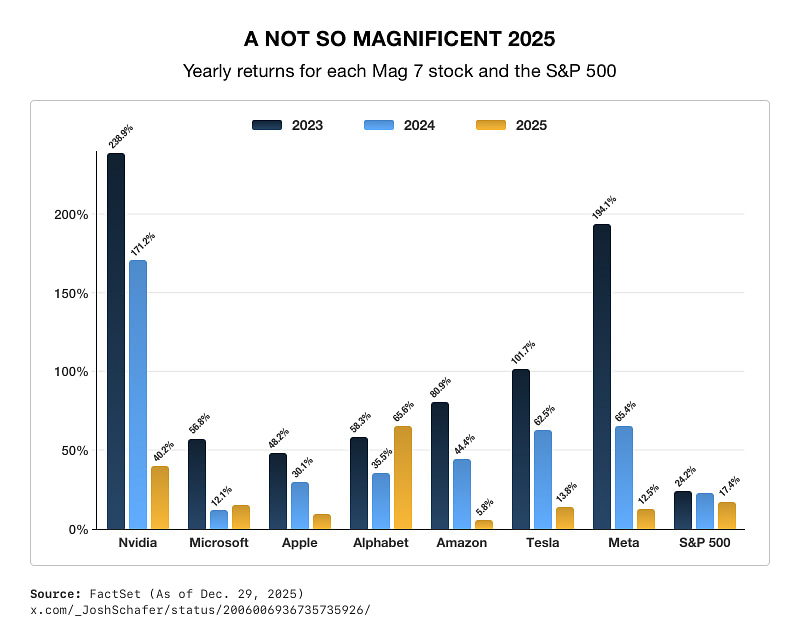
The influence of the so called Magnificent Seven has reshaped the entire market. Alphabet, Amazon, Apple, Meta, Microsoft, Nvidia, and Tesla rose by 698 percent between 2015 and 2024, compared with a 178 percent gain for the S&P 500 overall.4
5
Because these companies dominate major indexes, their success has pulled valuations higher across the market. This concentration means that any disruption to AI expectations could affect not only individual stocks but the broader financial system.
Critics note that artificial intelligence still requires enormous spending before profits become widespread. A 2025 MIT report found that 95 percent of organizations investing in generative AI are getting zero return. Analysts also expect AI companies to take on more than $1 trillion in cumulative debt to fund future projects.6
Political and Policy Uncertainty Adds to 2026 Risk
Beyond valuations and artificial intelligence, 2026 brings additional sources of uncertainty that could increase market volatility. One is politics. The year will be a U.S. midterm election year, a period that has historically been associated with choppier markets. In past cycles, stocks have swung wildly in reaction to shifting policy expectations, campaign rhetoric, and uncertainty about future legislation.
The future of interest rates remains uncertain. At the Federal Reserve’s December 2025 meeting, a rate cut passed with three dissents, an unusual sign of deep division that suggests policy direction is unclear. With possible leadership changes ahead, this lack of unity adds another layer of volatility for markets in 2026.
What Happens If Volatility Returns
“I’m far more worried than others about a serious market correction,” possibly within 6 months to 2 years, said Jamie Dimon, CEO of JPMorgan. 7
Whether or not an AI bubble fully bursts, uncertainty alone can drive sharp market swings. Nvidia’s stock price moved dramatically throughout 2025, falling to about 86 in early April after tariff concerns, then surging above 212 by late October. By late December it was still trading near 187. Investor sentiment turns quickly with each new headline, policy change, or shift in AI expectations.8
History offers a reminder of how fast conditions can reverse. When the dot-com bubble burst in 2000, the Nasdaq eventually lost more than three quarters of its value. Many companies failed, while a few survived and recovered over time.
Conclusion
As the new year begins, today’s market is drawing comparisons to the conditions before the Great Crash of 1929.9 Americans are facing an environment where sharp swings, sudden reversals, and heightened volatility are increasingly likely. While no one can predict the exact timing, you can prepare.
Physical gold has long served as a stabilizing asset during times of market stress. It does not rely on earnings growth, debt financing, or investor optimism. Gold exists outside the financial system and has historically helped preserve purchasing power when markets become unstable.
When held in a Gold IRA, it can provide balance and protection in portfolios heavily exposed to stock risk. To learn more, call American Hartford Gold today at 800-462-0071.


