













- Silver supplies are tightening as six years of deficits continue to drain available inventories.
- Strong Asian demand, shrinking Western vault stocks, and physical premiums are creating upward pressure on prices.
- Owning physical silver can help protect your finances outside the paper market.
Why Silver Pressure Is Building
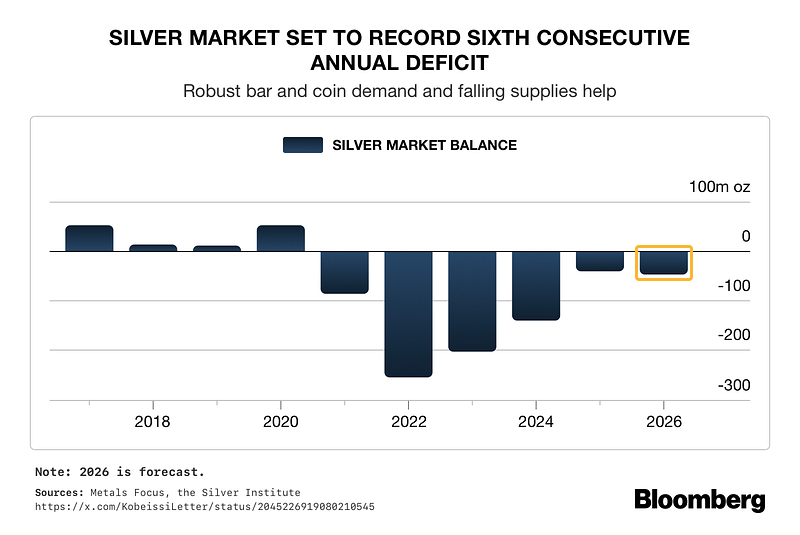
For six consecutive years, the global silver market has run a structural supply deficit. Demand has been outpacing mine production by tens of millions of ounces annually. In 2026, the shortfall is projected to be up to 70 million ounces. The market is being forced to continuously draw down above-ground inventories just to meet existing demand. The deficit is reshaping how silver is priced, stored, and traded around the world.1
Vaults Are Draining
The most visible symptom of the deficit is what is happening to exchange inventories. The amount of registered silver at COMEX was once above 300 million ounces. It has fallen by more than 70 percent since 2020, recently slipping below 100 million ounces. London and other Western vaults are seeing similar drawdowns. The amount of silver readily available for delivery is shrinking. Analysts now see the drop below 100 million ounces as a sign of deeper stress in the silver market, not just a normal short-term move.2
The size of the available silver supply matters because smaller stockpiles make prices more sensitive. When there is less silver ready for delivery, even a small jump in demand or a minor supply problem can push prices sharply higher. A well-stocked market can handle pressure. A tight market cannot.
The Metal Is Moving East
Much of the inventory leaving Western vaults is heading to Asia. India’s retail and investment demand remains robust. Shanghai silver futures have repeatedly traded at premiums of roughly $10 above COMEX and London pricing. China’s industrial consumption, particularly for solar panels and electronics, continues to absorb large volumes with no indication of slowing down. At the same time, China is limiting silver exports, adding another layer of pressure to an already tight global supply picture.4
Strong domestic demand in Asia is only part of the story. A meaningful share of that silver is not coming back to the open market. Some is being absorbed by ETFs. Some is being held by long-term investors. And some is being accumulated by institutions with no intention of returning it to the short-term trading circuit.
Once silver moves into those channels, it effectively leaves the available supply pool and tightens the Western market even further.
A Market Running on Two Prices
The price gap between Asia and the West is an important signal. It shows that silver is being priced differently depending on where and how it is bought. Paper markets reflect trading activity, investor positioning, and speculation. Physical markets reflect the real cost of getting actual silver delivered, especially in places where demand is high. Together, these forces are creating a dual market structure, with a growing gap between the screen price and the actual delivery price.
Pressure Is Building
Silver’s supply problem could lead to a squeeze. Years of deficits, falling inventories, and steady flows of metal to Asia have made the market more vulnerable. There are far more paper claims on silver than readily available physical ounces. If a major wave of contract holders demands delivery, the market must find the metal. Prices could skyrocket as the paper market catches up with tight physical supply.
Instead of a squeeze, silver could also steadily climb higher. Thin inventories and rising physical premiums can make sharp pullbacks harder to sustain. As the available supply keeps shrinking, the price floor may keep moving higher. Multiple major banks already project average silver prices in the $80 to $100 range for 2026, with higher targets possible if the dollar weakens and inventories keep tightening.
Conclusion
Silver can no longer be judged by the futures price alone. The real story is being shaped by shrinking inventories, strong demand from Asia, and the widening gap between paper silver and physical silver.
The key question about silver is simple: where will the next available ounces come from? If more metal keeps moving out of active circulation, the supply available for delivery could keep shrinking. The stage is being set for a sudden squeeze or a steady move to a much higher price floor.
Fast or slow, the upward pressure is building. Physical silver gives Americans a way to own the metal directly, outside the paper market that may soon be forced to catch up with reality.
To learn more about how holding physical silver in a Precious Metals IRA can help protect your financial future, call American Hartford Gold today at 800-462-0071.