












- Growing central bank demand is fueling high gold prices.
- Central banks are buying gold to guard against inflation, global conflict, and dollar risks.
- Individuals can also protect their wealth with physical gold held in a Gold IRA.
Trump Challenges Fed Leadership and Policy
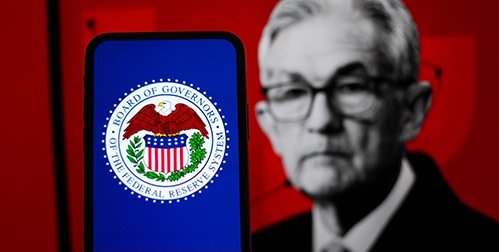
Markets are riding near all-time highs, but a serious debate is brewing that could have big implications: the possibility of President Trump removing Federal Reserve Chair Jerome Powell.
While it’s not certain Trump will take this step, the President and his allies have floated the idea. Doing so raises important questions about what it would mean for the economy, interest rates, and your retirement savings.
Why Does President Trump Want to Replace Powell?
President Trump appointed Jerome Powell as Fed Chair back in 2017. At the time, he thought Powell would pursue a more “dovish” approach to interest rates. That is, keeping them low to stimulate growth. Trump believed Powell would help extend the economic boom and keep borrowing costs low for households and businesses.
Since then, Trump has grown deeply frustrated with Powell. He blames him for not cutting rates aggressively enough. Trump has said Powell’s policies are costing the U.S. economy $800 billion a year. He accuses him of “whining like a baby about non-existent inflation” and refusing to do what is necessary to support the economy.1
White House adviser Peter Navarro echoed these frustrations. He said saying Powell’s policy was causing American households “acute financial pain.” Navarro issued a warning. “If Powell will not voluntarily adjust course, the board must act decisively to prevent further economic harm.”2
President Trump’s goal is clear: lower rates, faster growth, and avoiding a recession. He sees Powell as standing in the way of that.
Why Hasn’t Powell Cut Rates More?
From Powell’s perspective, his job is to keep inflation under control. He also wants to maintain the Fed’s credibility and independence. He has resisted calls for aggressive rate cuts. Arguing that the Federal Open Market Committee (FOMC) needs to see more evidence of a weakening economy before acting.
One challenge is that Trump’s own tariff policies are creating uncertainty in the economy. Moving back and forth on tariff deadlines is keeping markets guessing. Powell has said this uncertainty makes it difficult to judge when and how much to cut rates.
What Would Happen if Powell Were Fired?
George Saravelos is Deutsche Bank’s global head of FX research. He warned that removing Powell could spark a “swift, brutal market reaction.” Calling it “one of the largest underpriced event risks” facing markets.3

4
According to Saravelos, undermining the Fed’s independence could lead to:
– A sharp drop in the value of the dollar — possibly 3–4% immediately.
– Rising inflation and higher borrowing costs for the government, businesses, and households.
– A sell-off in U.S. Treasuries, particularly longer-term bonds, of 30–40 basis points.
– Questions about the dollar’s role as the world’s reserve currency.
The dollar has fallen more than 10% this year. That’s the worst first-half performance since 1973. Bond markets are already under intense pressure from soaring deficits and debt. Further instability could amplify these challenges.5
Ironically, these outcomes would be the opposite of what Trump hopes to achieve by firing Powell. Instead of lower rates and stronger growth, we could see higher rates, inflation, and a weaker economy.
Jamie Dimon, CEO of JPMorgan Chase, summed it up well:
“Playing around with the Fed can often have adverse consequences, absolutely opposite of what you might be hoping for.”6
Historical and International Comparisons
Some analysts compare the situation to when President Nixon pressured the Fed to lower rates in the 1970s. These policies wound up fueling stagflation, high inflation combined with stagnant growth. Today, with U.S. debt levels far higher and capital markets more concentrated, the impact could be even worse.
Others point to Turkey, where political interference in the central bank led to 35% inflation and a collapsing currency.
Could Trump Actually Fire Powell?
While most legal experts believe removing Powell before his term ends in May would be difficult, it is not impossible. Betting market Polymarket puts the odds of a Powell ouster at around 20%.7
Treasury Secretary Scott Bessent even floated the idea of a “shadow Fed Chair”. The shadow chair would be a Fed Chair announced before the end of Powell’s term. This shadow chair could show markets what to expect after Powell is gone. Thereby undermining Powell’s current power.
Meanwhile, the White House may already be looking for pretexts. Trump’s Office of Management and Budget reportedly threatened Powell over renovations at the Fed’s headquarters. Implying that any deviation from the construction plan could justify his removal.
Even if Trump succeeded, there’s no guarantee a new chair would deliver the steep cuts he wants. Policy decisions would still require FOMC consensus.
A Delicate Balance
President Trump has made no secret of his frustration with Powell. Or his desire to see lower rates to support the economy. His blunt language and bold approach resonate with many Americans who believe the Fed should be more proactive.
But the risks of undermining the Fed’s independence are real. And history suggests that such a move could have unintended consequences.
Perhaps the one sector to benefit from the impact of Fed interference is physical gold. A collapsing currency and bond market are likely to drive gold prices higher. Thus, moving a portion of retirement savings into physical precious metals can protect their value from the consequences of Fed interference and may also allow them to grow. To learn more about how a Gold IRA can benefit you, call American Hartford Gold today at 800-462-0071.