














De-Dollarization Accelerates
The U.S. dollar’s reign as the world’s financial cornerstone is eroding faster every day. And its decline is reshaping global trade, reserves, and investment flows in ways you can’t afford to ignore. Bank of America has noted that the process of de-dollarization “has been evident” for a while. The dollar itself has already fallen nearly 9% this year. With serious consequences for global markets and investor portfolios, de-dollarization may be hitting a point of no return.1
Dollar Weakness and Hedging Demand
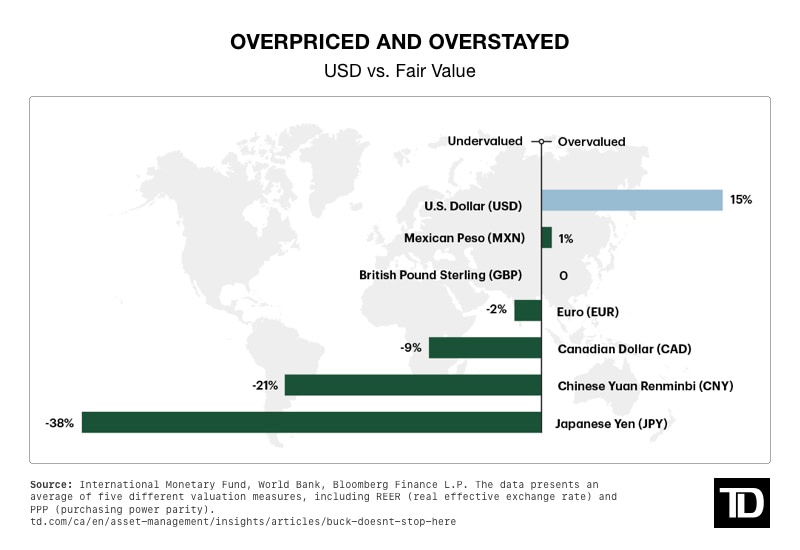
Bank of America strategists have pointed to renewed weakness in the U.S. currency. They note that investors are hedging against risks tied to the dollar. They believe this theme will continue as the dollar depreciates further from “overvalued levels.”
2
At the same time, central banks are shifting their reserve allocations. While the process has been slow, the trend is clear: traditional dollar reserves are giving way to alternatives. They are looking at smaller, more valuable currencies. These include the Australian and Canadian dollars. Currencies from BRICS nations are also attracting attention. According to Bank of America, this is more than a minor adjustment. It represents a “fork” in global reserves that could become a dominant force in the coming years.
The Debate Over De-Dollarization
Not everyone agrees with this outlook. Citigroup has called de-dollarization a “mirage.” However, several counterpoints say this change isn’t an illusion:
- Structural Shifts in Foreign Holdings: Foreign ownership of U.S. Treasuries has steadily declined. They’ve fallen from over 50% during the financial crisis to about 30% in early 2025. This signals a long-term reduction in reliance on the dollar.3
- Geopolitical and Policy Risks: Political polarization, tariffs, and sanctions all encourage other nations to seek alternatives to a ‘weaponized’ dollar.
- Emergence of Credible Alternatives: If countries like China provide stable and liquid financial systems, their currencies could gain traction. Non-dollar payment systems and bilateral swaps are already paving the way.
These factors show that de-dollarization is not just theoretical. It is more like turning an aircraft carrier. It is slow at first and hard to notice, but difficult to reverse once underway.
BRICS and the Shift in Trade
The BRICS nations have become a powerful driver of this transformation. They present one of the biggest challenges to U.S. monetary dominance in decades. The BRICS are reshaping patterns of global commerce that have been in place since the Bretton Woods system.
The inclusion of new BRICS members, Egypt, Ethiopia, Iran, Saudi Arabia, UAE, and Indonesia, only accelerates the process. These new trade relationships mean more transactions can be settled in local currencies rather than the dollar.
For example, Russia’s oil trade once relied on the dollar for about half of its transactions. Today, that figure has dropped to just 5%. 4
Rising powerhouse India is home to nearly 20% of the world’s population. They have advanced rupee-based trading through special accounts. Thereby allowing them to bypass trading in the dollar altogether.
Credit Markets Under Pressure
The dollar’s reserve status has long supported demand for U.S. corporate credit. For years, foreign investors poured money into U.S. credit regardless of valuation because of the dollar’s role as the world’s reserve currency.
The U.S. economy’s liquidity, depth, and geopolitical dominance supported dollar demand. Today, all of them are being questioned. Investors are increasingly reinvesting capital elsewhere rather than holding onto maturing U.S. dollar assets. Even modest outflows represent a meaningful shift. They have been averaging around $9.3 billion a month since 2020. 5
De-dollarization is becoming a vicious cycle. The case for heavy dollar exposure weakens with rising U.S. tariffs and ballooning deficits. If fewer dollars circulate globally, fewer dollars are needed in reserves. That reinforces the diversification trend and leaves U.S. assets more vulnerable.
Gold: The Neutral Reserve
Amid this shift, one asset is rising above the rest: gold. For the first time since 1996, central banks now hold more gold than U.S. Treasuries. This milestone is not a statistical anomaly. But a reflection of changing global priorities.
Gold has always been universal. It crosses ideological and geographic divides. And it holds its value when political risks undermine other assets. Prices have reflected this demand, crossing $3,500 per ounce in 2025, a 35% rise year-to-date.6
Conclusion
The dollar is not disappearing overnight. It will remain the dominant currency in trade, finance, and debt markets for years to come. But the direction of change is unmistakable. We’re heading towards a multipolar system. Gold, regional currencies, and even digital alternatives will share influence with, and over, the dollar.
As the dollar loses ground, the value of dollar-denominated assets, such as stocks and bonds in retirement accounts, can decline. Gold, on the other hand, is proving its resilience in this environment.
Protecting your wealth means adapting to these structural shifts. Physical gold held in a Gold IRA can help safeguard the value of your retirement funds. To learn how you can protect your savings with physical gold in a Gold IRA, contact American Hartford Gold today at 800-462-0071.