- White-collar slowdown signals the labor market may be losing momentum despite steady headline growth
- Slower hiring and cooling wages point to rising economic uncertainty ahead.
- Protecting your finances with physical gold can help preserve value during periods of volatility.
Labor Warning Signs
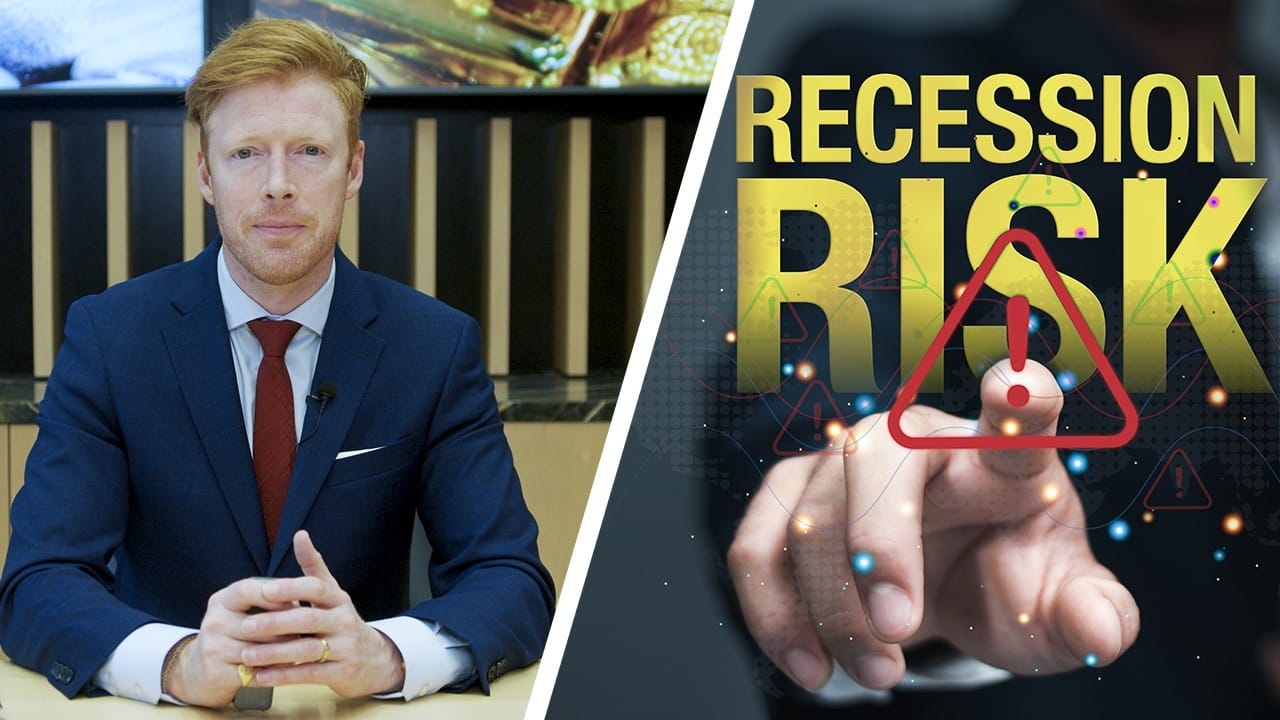
For years, the labor market has been a pillar of economic strength. Now, cracks are beginning to appear in the very sectors that power spending, investment, and growth. Slowing hiring, softer wage gains, and declining job openings are leading economists to warn of a potential “white-collar recession”.
Labor trends often provide some of the earliest clues about where the economy is headed, and recent data suggests momentum may be shifting. When higher-income sectors begin to cool, it can lead to softer consumer spending, more cautious corporate decision-making, and rising uncertainty about future growth.
The Hidden Weakness Beneath Job Growth
Recent job gains have been concentrated in a narrow slice of the economy, largely driven by healthcare and related services. While those sectors continue to expand, stripping out those gains reveals stagnation, and in some cases, outright decline across many white-collar industries.
Key sectors are already showing signs of contraction. Financial services employment has declined, federal employment has fallen, and many professional categories have barely budged despite historically high corporate capital expenditures. This uneven picture suggests the labor market is becoming increasingly fragile, even if the headline numbers don’t yet reflect it.
 1
Hiring Is Slowing to Crisis-Era Levels
1
Hiring Is Slowing to Crisis-Era Levels
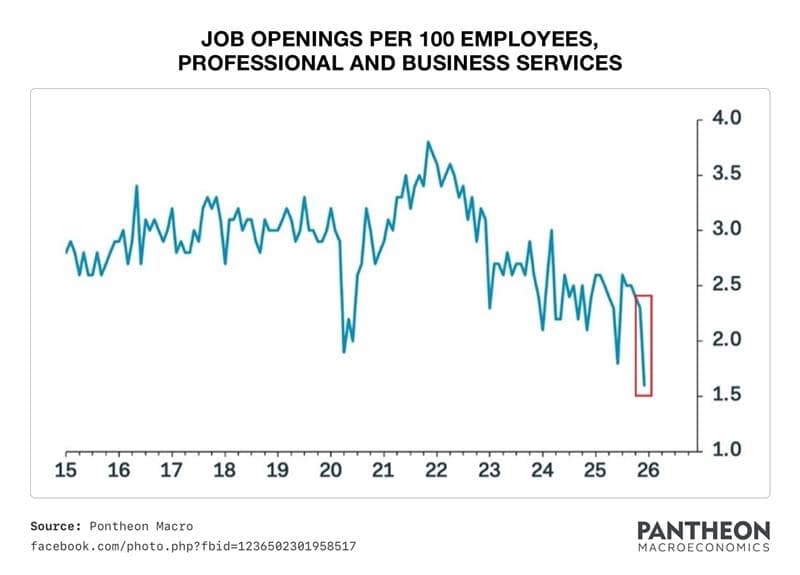
Perhaps the clearest sign of cooling demand is the sharp drop in job openings. Listings in professional and business services have fallen to near decade lows. There are roughly 1.6 openings per 100 employees, a dramatic decline from just a few years ago.
2
Hiring rates are now comparable to levels last seen during the 2008 financial crisis. And the typical job search is stretching to around six months. These trends point to growing reluctance among employers to expand payrolls as economic uncertainty rises.
Even broader data reinforces the trend. Total job openings in the sector have fallen significantly from their peak, and the ratio of unemployed workers to available positions is approaching levels seen during previous downturns. Together, these signals suggest the labor market is tightening faster than many experts believe.
Wage Growth Is Losing Momentum
At the same time, wage growth is slowing. The Employment Cost Index has risen at the slowest pace since early 2021, only slightly outpacing inflation. That means many workers are seeing little real improvement in purchasing power.
3
Rising costs, including healthcare and other essential expenses, continue to squeeze household budgets. When wage growth cools while prices remain elevated, it often leads to weaker consumer demand, which can slow economic growth further.
Why a White-Collar Slowdown Matters
White-collar workers represent a significant share of consumer spending, investment activity, and overall economic momentum. In fact, the top 10% of earners, many of whom are white-collar professionals, now account for roughly 45% to 49% of total consumer spending. Meanwhile, the top 20% have driven the majority of GDP growth in recent decades. When these sectors weaken, the effects can ripple through housing, corporate earnings, and financial markets.
4
Historically, labor market deterioration has often preceded broader economic slowdowns. Even if the economy hasn’t officially entered a recession, conditions can already feel restrictive for many households. That tightening environment can lead businesses to slow expansion plans, delay hiring, and focus on cost control — all of which can reinforce the cycle of slower growth.
What This Could Mean for Markets
Periods of slowing growth tend to bring increased volatility across stocks and bonds. As uncertainty rises, investors often reassess risk and look for ways to stabilize their portfolios.
A cooling labor market can influence expectations around Federal Reserve policy, interest rates, and future economic growth. A softer backdrop
may increase the likelihood of rate cuts to support growth, while also sparking inflation risks.
One effect of lower rates is that the holding cost of gold falls, which has historically supported higher prices. As uncertainty rises and the outlook shifts, diversification becomes increasingly important. Gold’s potential tailwind in a lower-rate environment highlights why it can help future-proof portfolios.
 Why Physical Gold Has Long Been a Defensive Asset
During times of economic uncertainty, gold has historically served as a reliable store of value. Unlike many financial assets, physical gold isn’t tied to corporate earnings or interest rate cycles, which can help it perform differently during periods of market stress.
Gold has also played an important role in preserving purchasing power over time. When economic conditions become uncertain and volatility rises, tangible assets help protect long-term wealth.
Adding physical gold to a diversified portfolio can provide balance, helping offset risks that may emerge when traditional assets face pressure.
Conclusion
The emerging signs of a white-collar slowdown shouldn’t be ignored. While the broader economy may still appear stable, tightening labor conditions often precede periods of greater volatility and slower growth. To learn how to protect the value of your nest egg with physical gold in a
Gold IRA, contact American Hartford Gold today at 800-462-0071.
Notes
1.https://www.facebook.com/photo.php?fbid=1236502301958517&set=a.417325457209543&type=3
2. https://qz.com/white-collar-jobs-recession-signs-data
3. https://qz.com/white-collar-jobs-recession-signs-data
4. https://finance.yahoo.com/news/top-10-earners-drive-nearly-191500198.html