






Debt Risks are Rising
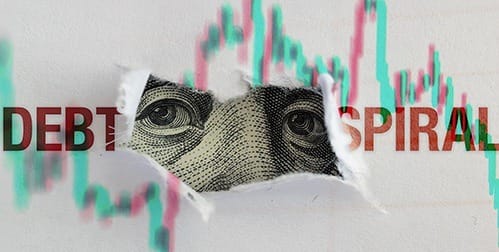
The United States, and in turn, the global economy, is racing towards a tipping point. As our national debt grows faster than the economy that supports it, the country is slipping into a potentially irreversible debt spiral. If the world’s largest economy falls in, the consequences will reshape market stability, the strength of the dollar, and the value of retirement funds for years to come.
Debt is Climbing with No Clear Ceiling
The danger of the debt is no secret. The numbers clearly show how the burden is growing. The debt currently stands at $38.65 trillion. It has been increasing $6 billion a day for the past year. According to the Congressional Budget Office (CBO), the U.S. national debt is projected to reach a staggering $64 trillion within a decade. 1

2
At the same time, deficits are expected to remain high as spending continues to outpace revenue. In 2026, major entitlement programs and interest on the debt are set to consume roughly three quarters of federal revenue. The pressure only grows over time. By 2036, those costs are projected to roughly equal or exceed everything the government collects. And instead of cuts, Congress is adding to the entitlement state’s structural deficits.3
Expenditures don’t deserve all the blame. Last year’s tax cut law is expected to increase the national debt by about $3.4 trillion compared with earlier projections. Some of that cost is offset by higher revenue from tariffs, which the CBO assumes will remain in place. If the Supreme Court strikes down those tariffs or a future president removes them, debt levels a decade from now could be even higher than current forecasts suggest.4
The Rising Cost of Borrowing
One of the biggest challenges, besides the sheer size of the debt, is the cost of servicing it. As borrowing grows, so do the interest payments.
Annual interest costs on the debt are projected to more than double to $2.1 trillion in a decade. The price of borrowing is rising. The Fed had to increase bond yields to continue attracting investors. They are losing confidence in U.S. debt due to rate hikes and “unsustainable” borrowing levels. 5
Surging interest payments are choking out vital government spending. But not paying interest isn’t an option. To default on the debt would be catastrophic. If investors balked, the government would be bankrupt and effectively closed.
Economists warn that if borrowing costs continue rising faster than economic growth, the country could face a structural problem. Economic growth is already slow, making it harder to grow out of debt. The Committee for a Responsible Federal Budget warned, “Later in the decade… the average interest rate on all federal debt will exceed nominal economic growth, which could represent the start of a debt spiral.”6
Creeping Consequences
A debt spiral happens when interest payments grow faster than the economy and start eating up more and more government revenue. The impact of slipping into one would be far and wide. Borrowing costs could surge as confidence fades. Inflation could rise as more money is created to manage the debt. Severe crowding out of private investment can lead to slower GDP growth and stagnant wages. Drastic cuts to discretionary spending would be needed. Cuts that cripple defense, infrastructure, and social programs while leaving little fiscal room for emergencies like recessions or wars. All in all, it could lead to a potential full-blown fiscal crisis with stock market crashes, global financial disruptions, and threats to national security.
We are already experiencing a preview. Growing debt levels are influencing currency confidence. Zhu Min is former deputy director of the IMF. He warned that declining global trust on the U.S. dollar poses one of the biggest risks to the world economy in 2026.
The dollar’s share of global foreign exchange reserves has fallen from 70% to 57%, signaling waning credibility. Zhu noted: “The proportions of gold, the euro and the yuan are rising, reflecting the market’s confidence in the US dollar is dropping.”7
Conclusion
Everyone is watching this freight train of debt speed toward a bridge that’s out. Leaders talk about how bad the crash could be, but no one seems willing to pull the brakes. Instead, they are hoping the disaster doesn’t happen on their watch. Meanwhile, the consequences reach into everyday financial life through higher interest rates, greater market volatility, and growing pressure on purchasing power.
Over time, these forces can create instability in traditional financial assets and make long term planning harder. That is why many savers look to diversify during periods of rising debt and uncertainty. Gold is tangible, limited in supply, and not tied to any single government or currency. Holding physical gold in a Gold IRA can help provide stability as financial pressures continue to build. To learn more, contact American Hartford Gold today at 800-462-0071.