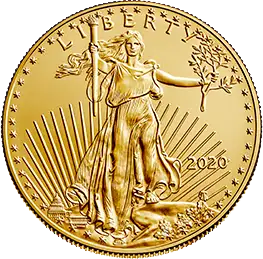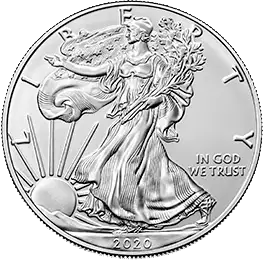


Flight to Gold Amid Tariff Dispute
When trade tensions rise, confidence falls, and volatility follows. Recent tariff threats are shaking markets. Investors find themselves reacting not to economic data, but to policy decisions that can change overnight. In response, financial institutions and individuals are once again turning to one of history’s most trusted safe havens: gold.
Over the weekend, rising geopolitical tensions helped push gold and silver to new all-time highs. Gold climbed above 4,660 dollars per ounce while silver surged past 94 dollars per ounce. These moves represent a rapid flight to safety as trade uncertainty took center stage.1

2
Tariffs Are Back and Markets Are Reacting
On Saturday, President Donald Trump reignited trade war concerns with Europe by threatening new tariffs on 8 European nations. The list includes Denmark, Norway, Sweden, France, Germany, the United Kingdom, the Netherlands, and Finland. The proposal calls for a 10 percent tariff that could rise to 25 percent starting February 1. They would remain in place until a deal tied to Greenland is reached.
European leaders responded quickly. The European Parliament announced it would freeze ratification of the trade deal reached with the U.S. last summer. Some lawmakers have openly discussed retaliation. And reports suggest the European Union is preparing a 93-billion-euro tariff package aimed at United States imports.
These developments have added another layer of stress to already fragile markets. Tariff headlines tend to move quickly. Once retaliation begins, the economic impact can spread far beyond the original dispute.
Why Trade Wars Hit Markets So Hard
Tariffs do more than raise prices on goods. They disrupt supply chains, complicate business planning, and weigh on growth expectations. Analysts have warned that European retaliation could focus on major United States technology firms, which have been a key driver of recent economic growth.
The International Monetary Fund recently described the global economy as steady. But it also warned that a flare up in trade tensions remains a clear risk. When policy decisions create uncertainty around future growth, investors often pull back from riskier assets and look for ways to preserve value.
Investors Move to Safe Havens
As trade tensions escalated, investors looked for safety. But the usual refuge, the dollar, was not providing it. Confidence in the United States dollar weakened, sending it lower and pushing investors to seek alternatives. The shift helped drive demand for precious metals. Spot gold rose to 4,689 dollars per ounce, up 1.5 percent on the day. While spot silver climbed to 94 dollars per ounce, rising nearly 4 percent.3
Linh Tran, Senior Market Analyst at XS.com, explained the reaction clearly.
“Gold’s sharp response to tariff related headlines highlights how market sentiment has shifted… toward policy uncertainty as a primary driver… As soon as the probability of escalation increases, defensive capital tends to move preemptively… In this context, gold functions as a portfolio risk balancing asset.”4
Gold’s Role During Uncertainty
Gold’s strength has not been limited to a single trading session.
David Morrison, Senior Market Analyst at Trade Nation, pointed to a broader issue behind the rally.
“Despite reduced expectations for multiple Fed rate cuts later in 2026, gold’s upward momentum remained intact… supported by a broader loss of confidence in other U.S. assets.”5
Over the past year, gold has risen more than 60 percent. Analysts cite global tensions, economic uncertainty, expectations of interest rate cuts, central banks buying gold, and China’s restrictions on silver exports as key drivers.
Silver Volatility Highlights Market Stress
Silver has outperformed gold during this period. It is supported by both investor demand and its role in industry. Its recent price action also highlights how sensitive markets are to policy shifts.
When silver was recently removed from a proposed tariff list covering critical minerals, prices dropped sharply. The move raised hopes that pressure from a supply deficit “short squeeze” might ease. The relief did not last long. As broader trade turmoil continued, silver prices rebounded. Showing that demand remains tied closely to uncertainty rather than a single policy decision.
Conclusion
Trade wars and tariff disputes create uncertainty that can be difficult to manage with traditional assets alone.
Susannah Streeter, Chief Investment Strategist at Wealth Club, summed it up:
“Gold has hit fresh record highs on its glittering run upwards. The precious metal is holding even more allure as a safe haven as worries spread about the repercussions of the US aggressive trade and geopolitical policies.”6
If you are looking to protect your funds long term from trade turmoil, physical precious metals may play an important role. Holding gold and silver directly, including through a Gold IRA, can help add stability when markets become unpredictable.
To learn more about owning physical precious metals and protecting your future, contact American Hartford Gold today at 800-462-0071.