


SPEAK WITH A SPECIALIST
800-462-0071
Gold
Silver
Platinum

Gold Prices Will Withstand the Fed’s Aggressive Rate Hikes

Gold Prices Will Withstand the Fed's Aggressive Rate Hikes
  • The Federal Reserve raised interest rates by half a point, with the promise of more to come
  • The gold market accounted for these hikes and remains strong
  • The price of gold is set to reach new heights according to several financial experts

The Fed’s Record Rate Hikes

Today, the Federal Reserve raised its benchmark interest rate by half a percentage point. The 50-basis-point increase is the biggest hike since May 2000. It’s the most aggressive step yet in its battle against the highest inflation in 40 years. Meanwhile, a possible 75-basis-point hike is on the table for June.1

Along with the raising rates, the central bank indicated it will begin reducing asset holdings on its $9 trillion balance sheet.

Many on Wall Street are concerned that the Fed’s ‘overtightening’ could lead to a recession. They feel the Fed is going too far in one direction after once calling inflation ‘transitory’. Despite the markets being prepared for both moves, there was increased volatility.
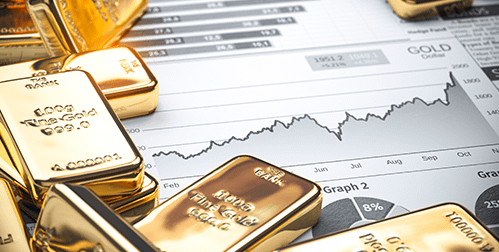
Gold Prices Will Withstand the Fed's Aggressive Rate Hikes

Gold Predicted to Overcome the Effects of Increased Rates

Gold, however, seems to be going off script when it comes to rate hikes. Traditionally, gold prices go down when rates go up. The idea being that the demand for an inflation hedge decreases. Also, fewer dollars would be required to buy an ounce of gold, reducing its dollar price. In this world rocked by inflation, war, and pandemic, old beliefs are being challenged as investors are forced to adapt. As the markets turn bearish, gold looks more and more like a bull.

Gold traders have baked an aggressive set of policy moves by the Federal Reserve into their prices. This means gold could rally if the Fed delivers as expected. It could also get support if the Fed responds to the possibility of a recession by slowing down the pace of its future rate hikes.

Gold is now seen as a winning bet in the face of the Fed’s move according to several sources.

Fidelity International believes that the price of gold is being held back. First, by aggressive interest rate increases. And second, by speculation over what Russia might do with its $140 billion worth of gold reserves.

However, Fidelity stated that gold is still an attractive investment. They cited the war in Ukraine, China’s economic slowdown, hot inflation, and the volatile stock market as reasons. The suppressed price can actually be a buying opportunity.

“Gold might have seemed the ideal asset to own, so have would-be gold investors now missed the boat? To the frustration of longer-term gold bulls, the answer is probably not,” Fidelity analysts noted. All the precious metal might need to reach new record highs is time, according to Fidelity International. 2

A recent Reuters poll of 31 analysts and traders echoes this sentiment. It concluded that the median forecast for gold prices came in at $1,920 an ounce for the April-June quarter. Gold prices are expected to hold firm this quarter as investors seek refuge from market volatility.3

Billionaire hedge fund manager Paul Tudor Jones is of a similar opinion. Jones shot to fame after he predicted and profited from the 1987 stock market crash. “You can’t think of a worse environment than where we are right now for financial assets,” Jones said Tuesday. “Clearly you don’t want to own bonds and stocks.” He said investors should prioritize capital preservation in such a challenging environment. One of the best ways to preserve capital is to invest in gold.4

Finally, Bloomberg Intelligence believes time is on gold’s side. They think gold will breach $2,000 once markets identify the end of the Federal Reserve rate-hike cycle. Their reasoning is that the rate hikes will contract the stock market. After the drop is great enough, the Fed will ease up on the financial tightening. When that bottom is reached, gold will launch up again. And this is what is likely to happen in 2022, according to the report. When the market predicted that rate raises were over, gold began the rally from about $1,000 an ounce to the high close of $2,063 in August 2020.5

The Fed’s clumsy attempts to fine tune the economy keep overcompensating in the wrong direction. First, it pumped in too much cash during pandemic. Now, it is aggressively taking money out. In the face of all this heavy handiness, gold is proving itself to be the stable choice. Now is the time to think long term and learn about a Gold IRA. Contact American Hartford Gold to learn how.


Notes:
1. https://www.cnbc.com/2022/05/04/fed-raises-rates-by-half-a-percentage-point-the-biggest-hike-in-two-decades-to-fight-inflation.html
2. https://www.fidelity.co.uk/markets-insights/investing-ideas/investing-ideas/whats-been-holding-the-gold-price-back/
3. https://money.usnews.com/investing/news/articles/2022-05-03/inflation-and-war-risks-to-buoy-gold-in-short-term-reuters-poll
4. https://www.cnbc.com/2022/05/03/paul-tudor-jones-says-he-cant-think-of-a-worse-financial-environment-for-stocks-or-bonds-right-now.html
5. https://www.bloomberg.com/professional/blog/commodities-appear-at-higher-risk-of-2008-style-pump-and-dump/

China’s Covid Response Ails the Global Economy

China's Covid Response Ails the Global Economy
  • China enforces strict lockdowns to stop Covid-19
  • Shuttered Chinese industry will cause shortages and raise inflation
  • Snarled Chinese ports will also drive inflation higher

China Shuts Down to Stop Covid-19

The economic crisis caused by the pandemic is returning to where it all began. Beijing is prioritizing control of the pandemic above all, including the fate of the global economy. The Chinese government is taking drastic measures to stop the spread of COVID-19. They have implemented a zero COVID policy. As of April 19, more than half of China’s biggest cities were under some form of lockdown. Two and a half weeks after extending a partial lockdown into a shutdown of the entire city, Shanghai shows few signs of easing its COVID-19 controls.

The economic damage caused by the massive lockdowns is not confined to China itself. Experts say China’s lockdowns will make inflation and the supply chain nightmare even worse.

China accounts for about 12% of global trade and 18% of all U.S. imports. And for computers and electronics, that number rises to 35%. Covid restrictions have idled factories and warehouses, slowed truck deliveries and exacerbated container logjams. U.S. and European ports are already snarled. The $22 trillion trade in global goods is facing months of severe disruption.1

China's Covid Response Ails the Global Economy

Covid Lockdown Effects on the Global Economy

Companies are beginning to panic. “The downstream impact is coming, and it’ll be heavy.” John Bree, the chief risk officer at Supply Wisdom, said. “The latest China lockdowns combined with the Russia-Ukraine war is too heavy a burden. The global chaos is going to further exacerbate disruption and take inflation to a new level.”2

Bank of America analysts said that it’s “another adverse supply shock for the global economy.” And that it will weaken growth and extend the period of high inflation.3

A top Huawei executive said, “If Shanghai cannot resume production by May, all of the tech and industrial players who have supply chains in the area will come to a complete halt. Especially the automotive industry. That will pose severe consequences and massive losses for the whole industry. This will result in supply shortages of some consumer goods in the U.S. in the coming months. Notably electronics, home appliances, and clothing will be affected.”4

Shipping congestion at Chinese ports also threatens to derail a global recovery already hurt by inflation. Shanghai, home to the world’s largest container port, has remained shuttered since March 28. One in five container ships is now stuck at ports worldwide. 30% of the backlog is coming from China. Problems at ports mean rising costs for companies. And in turn, increasing inflation for U.S. consumers.

Even if strict lockdowns in Shanghai are lifted, U.S. ports will likely be slammed with a wave of pent-up cargo from newly reopened factories in China. That will lead to higher freight rates. It will worsen congestion at ports worldwide. The costs of which, again, get passed onto the consumer. It will likely take at least a year for the logjams to unsnarl and return to normal.

The long-term effect of this chaos could be the end of globalization as we know it. Supply chains are so interconnected and fragile that a single issue in one place will affect consumers around the globe. Bringing supply chains closer to home has now become a business necessity.

There is one positive result from all of this. The price of oil has gone down. The commodity dropped as the market anticipates less demand from a locked down China.

The return of Covid in China seems to be restarting an awful cycle. The global economy is always hanging on the cusp of normalizing, but never getting there. Now is the time to put your money in a safe asset that can weather this storm. Contact AHG about opening a Gold IRA today.

Notes:
1. https://www.bloomberg.com/news/features/2022-04-25/china-s-covid-crisis-threatens-global-supply-chain-chaos-for-summer-2022

2. https://fortune.com/2022/04/23/china-lockdowns-inflation-supply-chain-nightmare-shanghai/
3. https://fortune.com/2022/04/23/china-lockdowns-inflation-supply-chain-nightmare-shanghai/
4. https://time.com/6168543/china-zero-covid-shanghai-lockdown-economy-impact

‘Stagflation’ is Moving from Risk to Reality

'Stagflation' is Moving from Risk to Reality
  • The IMF and the Brookings Institute reported a high probability of global stagflation
  • Soaring inflation and stagnant growth will continue due to war and pandemic
  • Precious metals are set to climb in face of global risks

IMF Report Points to Stagflation

The global economy is racing down the road towards stagflation according to two reports released this week. Both the International Monetary Fund (IMF) and the Brookings Institute detailed how current world conditions point to higher inflation and slower economic growth.

Simply put, stagflation is when a stagnant economy couples with double-digit inflation. Stagflation occurred in the mid-’70s. It was caused by two oil crises that triggered recessions. The economic ‘maliase’ lasted into the 80s.

Stagflation has often been described as the worst thing that can happen to an economy outside of a war, a natural disaster, or a pandemic. If GDP doesn’t grow enough for wages to keep pace with inflation, everyone feels the pinch. Purchasing power declines, people lose their jobs, credit and investment dry up, and poverty increases.

The International Monetary Fund slashed global growth and revised inflation upward in its World Economic Outlook released Tuesday. The IMF sees inflation soaring to 5.7 percent in advanced economies and 8.7 percent in emerging and developing economies. They lowered their prediction for global growth to 3.6% this year, down from 6.3% in 2021.1

The IMF blames the negative impact of the Ukraine war. They also account for new supply-chain disruptions from China due to its strict Covid-19 measures.

The IMF numbers are being conservative. They are based on a few assumptions. One is that the war remains limited to Ukraine. Another is that further sanctions against Russia don’t include oil. And third, that the pandemic abates throughout the year. If any of these assumptions prove false, IMF predictions for inflation and growth can get much worse.

Barely six months ago, IMF chief Kristalina Georgieva dismissed talk of stagflation. Now, she says that the Russian invasion is a “massive setback for the global recovery” from COVID. She admits that “for the first time in many years, inflation has become a clear and present danger.”2

The findings of the IMF are echoed in the Brookings Institute/Financial Times most recent report.

'Stagflation' is Moving from Risk to Reality

The Brookings Institute Also Predicts Stagflation

TIGER is a global index tracking the global economic recovery. It’s run by the Brookings Institute and the Financial Times. The index warned in its Sunday update that stagflation might affect most economies this year. They also blamed the war in Ukraine for greatly slowing down the global post-pandemic recovery. The composite index shows dramatically slower growth, rampant inflation, and dropping confidence levels. It says that each of the world’s three big economic blocs faces considerable difficulties.

There is a chance that the U.S. could avoid stagflation due to the relative health of its economy. However, that chance doesn’t look good. The Brookings Institute said, “The Fed is at real risk of losing control of the inflation narrative and could be forced to tighten even more aggressively than it has signaled, raising the risk of a marked slowdown in growth in 2023.”3 Joe Biden knows that stagflation pushed Jimmy Carter out of office. His administration may react by doing what is best for getting reelected, not what is best for the economy.

Precious metals such as gold are set to shine in this current climate. The IMF predicts precious metals will rise by 5.8% in 2022 and by 2.1% in 2023.4  Risks to growth, unending inflation, rising geopolitical risks and a fragmenting global economy are pushing investors to safe havens. If you have assets you want to protect from stagflation, contact AHG to learn more about the benefits of a Gold IRA.

Notes:
1. https://www.politico.eu/article/imf-warns-of-inflationary-spiral/
2. https://www.gzeromedia.com/will-stagflation-make-a-comeback
3. https://www.ft.com/content/e2f2c5ab-ab3f-4a2f-b700-be6894fc179d
4. https://capital.com/can-gold-shine-again-in-the-wake-of-the-imf-stagflation-warning

‘Peak’ Inflation May Have Arrived with New Record-Breaking Numbers

'Peak' Inflation May Have Arrived with New Record-Breaking Numbers
  • Two measures of inflation hit record highs in March
  • Major banks claim that inflation is at its peak is met with skepticism
  • Even if this is peak inflation, expect a long, slow descent to normal

March Data Reveals More Record Setting Inflation

More record-breaking inflation was reported this month. Wholesale prices surged again in March. Strong consumer demand, pandemic-related supply chain snarls and the Ukraine war continued to fuel the highest inflation in decades.

The Producer Price Index is the latest data point showing the price pressure. PPI is considered a forward-looking inflation measure. It tracks prices in the pipeline for goods and services that eventually reach consumers. The PPI hit a new all-time high as it rose 11.2%. It was the biggest jump in prices since the data series began in November 2010.1

Just yesterday, the Consumer Price Index showed that the cost of consumer goods and services surged by 8.5% year over year. That’s the highest recorded level since 1981. Consumers are paying more for everyday necessities, including groceries, gasoline and cars.2

Swelling inflation has prompted the Federal Reserve to begin aggressively raising interest rates. They aim to lower inflation without causing a recession.

'Peak' Inflation May Have Arrived with New Record-Breaking Numbers

Peak Inflation

Analysts at Bank of America, Morgan Stanley and UBS said Tuesday that they think inflation has hit its peak.

“Barring further severe disruptions, the March release is likely to be the peak in terms of year-over-year rates,” analysts at Deutsche Bank predicted earlier this week.3

The predictions of “peak inflation” could comfort the White House. Democrats face a potential loss of Congress in this year’s elections because of inflation. Voters have consistently told pollsters that price increases are a top concern. They give President Joe Biden low marks for his handling of the economy.

The banks are optimistic for a couple of reasons. They see supply chain snags unwinding as we move past Covid. According to them, lower used car prices are an indicator of this. Another reason is that the Fed is strongly tackling the issue with high interest rates.4

Skeptics say we’ve seen this movie before. When inflation started raging last year, both Fed Chair Jerome Powell and Biden played down the phenomenon as “transitory.” That wasn’t the case.

There are serious concerns about inflation lingering. The prices of services are beginning to rise. They are taking the place of goods as the primary driver of price increases.

“We have been at this juncture before where subtle shifts within the data make it appear that the level of inflation has reached its peak for the cycle only to keep marching higher,” Charlie Ripley, senior investment strategist for Allianz Investment Management.5

ING Bank stated that US inflation may near its peak, but it will be a long slow descent. This is due to lingering supply chain issues, significant tightness in the labor market and ongoing corporate pricing power. They predict inflation won’t come down to 3% until deep into 2023. At the same time, expect the economy to shrink.6

The bank’s peak inflation prediction may be correct. But they also may be hoping for the best, fearing the effects of unchecked inflation. Investors should heed the expression, hope for the best, prepare for the worst. One of the best ways to prepare for lingering inflation is to open a Gold IRA. Contact AHG to learn how you can easily open one today.

Notes:
1. https://www.cnn.com/2022/04/13/economy/producer-price-inflation-march/index.html
2. https://www.cnn.com/2022/04/13/economy/producer-price-inflation-march/index.html
3. https://www.yahoo.com/now/hit-peak-inflation-224715179.html
4. https://www.politico.com/news/2022/04/12/inflation-spiking-consumer-prices-00024707
5. https://www.politico.com/news/2022/04/12/inflation-spiking-consumer-prices-00024707
6. https://think.ing.com/articles/us-inflation-nears-the-peak-but-it-will-be-a-long-slow-descent

Fed Dead Set to Stop Inflation at All Costs

Fed Dead Set to Stop Inflation at All Costs
  • Fed “Doves” express central bank’s aim to stop inflation at any cost
  • Survey shows Americans believe inflation is their top concern and a recession is coming
  • Inflation fears keep gold in demand despite rising interest rates

Fed “Doves” Commit to Aggressive Rate Hikes to Stop Inflation

Fed Governor Lael Brainard and San Francisco Fed President Mary Daly spoke Tuesday. They stressed the central bank’s commitment to fighting inflation with higher interest rates. “It is of paramount importance to get inflation down,” Brainard said. Raising rates is necessary to ensure that “you’re not worrying about whether prices will be higher, considerably higher tomorrow,” Daly added. She that said inflation running at a 40-year high “is as harmful as not having a job.” She stressed, “we’re not going to let this go forever.”1

Their comments carried more weight because they are considered the Fed “doves”. Brainard and Daly usually favor low rates. They also prefer less restrictive policies. Their urgency shows how seriously the Fed is taking the threat of inflation.

Brainard also wants to reduce the Fed’s $9 trillion balance sheet at a breakneck pace. The bank’s massive bond-buying program was designed to support the economy during the pandemic. It would be cut as soon as May.2

Major stock market averages closed considerably lower after their announcement.

Fed Dead Set to Stop Inflation at All Costs

Inflation is Everyone’s Main Concern

Inflation is costing the average U.S. household an additional $296 per month. Experts expect it to get worse before it gets better.3

A CNBC and Acorns survey showed that 76% of Americans worry inflation will force them to rethink financial choices. People are most concerned about gas prices, housing costs and food costs. In the last year, gas spiked 38%, shelter rose 4.7% and food prices increased 7.9%.

People’s fears are not unfounded. The USDA’s Food Prices Outlook for 2022 March report said that all food prices are predicted to increase. They expect a 5% rise in food prices this year alone. And that’s on top of all the other increases consumers faced over the past several months.

The survey also showed that Americans are unhappy with the White House. 61% of people surveyed disapprove of how President Joe Biden is handling inflation.4

Americans are also very concerned about an economic recession. 81% of respondents believe one is likely to happen this year. They aren’t alone. Deutsche Bank on Tuesday became one of the first big banks to predict a U.S. recession. “We no longer see the Fed achieving a soft landing. Instead, we anticipate that a more aggressive tightening of monetary policy will push the economy into a recession,” the Deutsche Bank economists. Other analysts currently predict a 30% chance of recession. 5

Gold Stays Strong

Gold prices steadied on Wednesday. Concerns over high inflation offset fears of aggressive interest rate hikes.

Meanwhile, rising inflation and safe-haven demand resulted in extraordinary sales of physical gold in March. The U.S. Mint saw its strongest gold bullion demand in 23 years. They reported that sales of American Eagle Gold bullion coins were up 73% from last month.6

The Fed is determined to stop inflation at any cost. However, their actions may cause extensive collateral damage to the economy. People who are interested in protecting their retirement funds should act before the Fed’s plans are in full effect. Contact AHG about a Gold IRA today.

Notes:
1. https://www.cnbc.com/2022/04/05/-key-people-from-the-fed-just-spooked-the-markets-heres-what-they-said.html
2. https://www.cnbc.com/2022/04/05/-key-people-from-the-fed-just-spooked-the-markets-heres-what-they-said.html
3. https://www.cnbc.com/2022/04/05/inflation-fears-force-americans-to-rethink-financial-choices.html
4. https://www.cnbc.com/2022/04/05/inflation-fears-force-americans-to-rethink-financial-choices.html
5. https://thehill.com/news/3260164-deutsche-bank-predicts-2023-recession-for-us/
6. https://www.kitco.com/news/2022-04-04/U-S-Mint-sees-strongest-gold-bullion-demand-in-23-years-sells-426k-ounces-in-Q1.html

Recession Risk On The Rise

Recession Risk On The Rise
  • The Fed is aggressively raising interest rates to fight skyrocketing inflation
  • Experts fear the increases will trigger a recession and stagflation
  • Economic signs warning of recession are flashing

Runaway Inflation Leads to Aggressive Rate Hikes

Economists had once hoped inflation would cool off by this summer. Then Russia invaded Ukraine. Now, the economic outlook has darkened. Prices for gasoline, food, and other raw materials continue to rise.

The economy’s lingering struggles caught the Federal Reserve by surprise. In response, they decided to pursue aggressive interest rate hikes to curb inflation. Experts now fear the rapid increases could stall the economy and bring on a recession.

The Biden administration is giving the Fed a lot of leeway. They know there isn’t much else they can do. Some Democrats worry about killing growth in the middle of a midterm election year. But inflation is even worse for them politically. Recent polls show that price spikes are by far the top concern among voters. 1

Recession Risk On The Rise

Experts Warn of Recession

Fed Chairman Jerome Powell said that they can tame inflation without collapsing the economy. He cited 1965, 1984 and 1994 as examples. However, history points to a recession. Since 1961, the central bank has raised interest rates to tame inflation nine times. Eight of those times resulted in a recession. 2

Larry Summers, the former US Treasury Secretary, accused the Fed of “wishful and delusional thinking.” He finds “absurdity” in the central bank’s forecast for inflation to rapidly cool off in a red-hot jobs market.

Summers previously warned that Fed policy put the US economy on a path towards stagflation. Stagflation is the toxic mix of weak growth and high inflation. It plagued the US economy in the late 1970s and early 1980s.3

Moody’s Analytics chief economist Mark Zandi said stagflation is a “low-probability” event. He said the Fed would do whatever it took to avoid it. This includes stopping inflation by crashing the economy. “If it looks like we’re going into stagflation,” Zandi said, “the Fed will push us into recession.”4

J.P. Morgan currently puts the odds of recession at roughly 30% to 35%. The historical average is about 15%.5

Recession Warning Sign Flashing

Yield curve inversions are when short-term bond yields exceed those of longer-term bonds. The spread between the 5-year and 30-year Treasury yields briefly inverted on Monday. This hasn’t happened since 2006. It flipped on fears that aggressive rate hikes would stunt the economy.

Yield curve inversions are rare. They are viewed as a good recession predictor because they reflect investor fear about the economy’s long-term prospects. Every recession in the past 60 years was preceded by an inverted yield curve. This is according to research from the Federal Reserve Bank of San Francisco.6

Preparing for Recession

The underlying economy could be strong enough to handle a few rate hikes. But with a 1 in 3 chance of a recession, it is best to be prepared.

Gold is proven to hold its value as the economy contracts during a recession. During the Great Recession, the Producer Price Index (PPI) for gold rose 2.6 percent in 2008. It increased 12.8 percent in 2009. Overall, between 2008 and 2012, the value of gold increased dramatically. Gold had a 101.1-percent surge in the PPI. It set a then record high of $1,917.90 an ounce in August of 2011.7

If you are interested in hedging against the likelihood of a recession, contact a precious metals specialist at AHG about a Gold IRA today.

Notes:
1. https://www.politico.com/news/2022/03/29/federal-reserve-recession-inflation-rates-00021119
2. https://www.cnn.com/2022/03/25/economy/recession-risk/index.html
3. https://www.cnn.com/2022/03/25/economy/recession-risk/index.html
4. https://www.cnn.com/2022/03/25/economy/recession-risk/index.html
5. https://www.cnbc.com/2022/03/28/bond-market-is-flashing-a-warning-sign-that-a-recession-may-be-coming.html?&qsearchterm=recession
6. https://www.foxbusiness.com/economy/recession-warning-flashes-red-yield-curve-inversion
7. https://www.bls.gov/opub/btn/volume-2/pdf/gold-prices-during-and-after-the-great-recession.pdf

Desperate Times Cause Desperate Measures

Inflation - Desperate Times Cause Desperate Measures
  • Fed Chair Powell promises bigger, faster rate hikes to combat soaring inflation.
  • The Fed hopes for a ‘soft landing’ but history points to recession.
  • Gold positioned to hedge against inflation and recession.

Powell Threatens Faster and Bigger Rate Hikes

After letting inflation grow at its fastest pace in 40 years, Federal Reserve Chair Powell is desperate. Inflation is now at 7.9%. Powell said the Fed may move much more quickly to get it under control. He is ready to raise rates faster if needed. He’ll also quickly withdraw Fed support from the economy if necessary.

“The expectation going into this year was that we would basically see inflation peaking in the first quarter, then maybe leveling out,” Mr. Powell said. “That story has already fallen apart. To the extent that it continues to fall apart, my colleagues and I may well reach the conclusion that we’ll need to move more quickly.”1

Policymakers already raised interest rates by a quarter point last week. They forecast six more similarly sized increases this year. The goal is to squeeze the economy, slow consumer spending and loosen the labor market. Essentially, they want to slam on the brakes instead of just easing off the gas.

Asked what would keep the Fed from raising interest rates by half a percentage point at its next meeting in May, Mr. Powell replied, “Nothing.” They said they would make a supersized move if they thought one was appropriate. Experts predict the Fed will raise its key interest rate to more than 2 percent by December. 2

He said that the timing of settling into some new normal is ” highly uncertain.” In other words, they don’t how long inflation will last. Powell implied that rates won’t be determined by economic forecasts. Instead, rates will come down when actual prices come down. Until then, they will just keep raising rates.

Inflation - Desperate Times Cause Desperate Measures

Recession Likely

The Fed has put a damper on stock market traders. They are moving away from riskier assets. Raising rates hurts share prices if they tank economic growth or cause the economy to contract.

History is littered with examples of the Fed causing a recession in its attempts to rein in inflation. But Powell is hopeful that there can be a ‘soft landing’. However, the Fed is believed to behind the curve on solving this problem. As a result, the financial community has lost faith in them. They are betting on history over hope. 3

Gold prices held onto gains in the face of the news. Typically, if the Fed raises rates, gold prices go down. The idea being is if inflation is going down, people won’t seek a hedge against it. But global conflict, slowing growth, and rising oil prices are keeping the threat of inflation very real.

One of the best investments if the Fed does cause a recession – Gold. Gold is a safe haven in both inflation and recession.

The most recent recession occurred between 2007 and 2009. It was a brutal and long economic downturn driven by the housing crisis. The S&P 500 Index dropped 37% during that time. But what happened to gold? The price rose 24%!

The World Gold Council tracked the correlation between gold and the S&P 500 Index between 1987 and 2010. They found that in a recession, when stock prices are likely plummeting, you can expect gold to be moving the other way. 4

If you are interested in protecting your retirement fund from today’s inflation and tomorrow’s recession, you should contact America Hartford Gold about opening a Gold IRA today.

Notes:
1. https://www.nytimes.com/2022/03/21/business/economy/powell-fed-inflation.html
2. https://www.nytimes.com/2022/03/21/business/economy/powell-fed-inflation.html
3. https://www.axios.com/fed-chief-powell-supply-0222dcd7-224b-46e8-9ff9-2a523d7ad605.html
4. https://www.fool.com/investing/2017/07/01/why-investors-buy-gold-in-a-recession.aspx

Historic Rate Hikes Are ON

Historic Rate Hikes are ON
  • The Federal Reserve approved raising interest rates to fight soaring inflation.
  • The US faces the fastest and largest rate increases in years.
  • No guarantee inflation will be tamed but the economy may stall out.

Inflation Drives Need for Rate Increase

The Federal Reserve approved the first interest rate hike in more than three years. Six more rate hikes are scheduled for this year alone. The Fed says the aim of rate hikes is to tame runaway inflation.

Price increases are at their fastest 12-month pace in 40 years. The increases are made worse by clogged supply chains unable to meet renewed demand. Prices are up 7.9% year-over-year according to the Consumer Price Index. Gasoline alone has risen 38% in the 12-month period. 1

The Ukraine war has just made inflation worse. The conflict spiked oil prices – which turbocharges inflation. The Russian invasion is going to have a negative impact on the US economy. The Fed stated, “The implications for the U.S. economy are highly uncertain, but in the near term the invasion and related events are likely to create additional upward pressure on inflation and weigh on economic activity.” 2

When the Fed raises interest rates, the effects ripple throughout the economy. Mortgages, auto loans, and credit card rates become more expensive for consumers. Businesses also pay more to borrow the money they need to fund their operations or expand. That tends to make both consumers and businesses spend less. Which may then cool the economy and, hopefully, drive down the prices of goods and services.

The Fed acknowledges they missed the mark by calling inflation ‘transitory’ in December. Their original 2% target now looks ridiculous. They now estimate dramatically higher inflation and much slower GDP growth. Kiplinger’s predicts inflation will soon spike close to 10%. 3

Historic Rate Hikes are ON

How High and How Fast Rates Are Going Up

The policy making Federal Open Market Committee will raise rates by a quarter percentage point. This puts the rate in a range between .25% and .50%.

They are scheduled to raise rates at each of the six remaining meetings this year. And then three more hikes in 2023. And theoretically, no hikes in 2024. The Federal Reserve hopes by raising the rates incrementally, they won’t stall the economy.

Fed policy set the groundwork for this out-of-control inflation. Inflation was superheated by unprecedented levels of fiscal and monetary stimulus – more than $10 trillion worth.

Also, the Fed tried a new inflation policy in September 2020. They slashed rates to near zero and kept pumping money into the economy to keep it afloat during the pandemic. They agreed to let the economy heat up in the interest of a full and inclusive employment goal that spanned race, gender and wealth.

The Fed is not only going to raise rates. They are also going to unload the nearly $9 trillion balance sheet of mortgage-backed securities they bought during the pandemic. 4

Experts predict the most likely result of raising rates and dumping their holdings will be a major stock market drop.

The country now faces a few paths before it can return to normal. Either there will be double digit inflation, a recession, or, worse case scenario, both.

If you have retirement assets that you don’t want lose, the time to protect them is now. The Gold Ira from American Hartford Gold is the ideal vehicle to secure your retirement funds. Contact them to learn more.

Notes:
1. https://www.cnbc.com/2022/03/16/federal-reserve-meeting.html
2. https://www.cnbc.com/2022/03/16/federal-reserve-meeting.html
3. https://www.kiplinger.com/economic-forecasts/inflation
4. https://www.cnbc.com/2022/03/16/federal-reserve-meeting.html


Goldman Sachs Predicts Gold Will Top $2500 This Year

Goldman Sachs Predicts Gold Will Top $2500 This Year
  • Russia-Ukraine conflict and inflation fears increase demand for gold
  • Goldman Sachs revised their gold price projections to new record levels

Gold Trading at Historic Levels

Due to current events, Goldman Sachs has pushed its gold price projections on the 6-month horizon to a record $2,500 an ounce. That’s almost $500 more than the previous record price set in August 2020.

Gold prices passed $2,000 an ounce for the first time in a year-and-a-half on Monday as Russia’s full-scale assault on Ukraine continued.

Gold surged again to trade above $2,070 this week.1 Analysts are now predicting a sustained rise as further sanctions against Russia rattle markets. Investors are flocking to gold as the crisis worsens. Gold is seen as a safe-haven asset in times of market turmoil because it retains its value during a time of crisis. Goldman Sachs called gold the “currency of last resort”.

Goldman Sachs Predicts Gold Will Top $2500 This Year

Gold Price Projections

Goldman Sachs updated their gold price forecasts due to the conflict, international inflation and the threat posed by rising interest rates.

The bank changed its 3-month horizon to $2,300 an ounce, from $1,950 an ounce previously.
The 6-month protection has moved to $2,500 an ounce, from $2,050 an ounce previously.2

Goldman is citing the demand for gold is coming from consumers, investors, and central banks. Everyone is seeking a way to shelter their wealth in the face of soaring inflation and a stagnating economy.

Stocks and bonds have been experiencing wild swings with dramatic one day drops since the conflict began two weeks ago. Bitcoin has also continued to be volatile, losing the ‘digital gold’ title previously bestowed on it by some investors.

The crisis is shaking a fragile global economy that was already struggling with inflation, supply chain issues and the remnants of a pandemic. Unfortunately, there seems to be no clear ending in sight for the conflict. So, while stocks keep dropping, informed investors are moving into the one commodity that is poised to keep increasing in value – gold. Learn how to protect your assets with a Gold IRA from American Hartford Gold. Give us a call today 800-462-0071.

Notes
1. https://www.marketwatch.com/investing/future/gold?mod=home-page
2. https://www.cityam.com/gold-surges-again-as-goldman-predicts-price-will-top-2500-this-year/

Russian Invasion Creates Fed Uncertainty

Russian Invasion Creates Fed Uncertainty
  • The Fed is unsure of how the Russian invasion will impact the economy
  • The Fed still plans to raise rates to tackle runaway inflation
  • Those plans can change at any time based on current events

Effects of the Russian Invasion on the Fed

Russia’s invasion of Ukraine threw the Federal Reserve into chaos.

Fed Reserve Chair Jerome Powell said the near-term effects of war in the Ukraine on the US economy are “highly uncertain”. 1 The invasion could pull Fed policy in opposite directions. Powell admitted that the events in Europe can both increase inflation and undercut growth.

Despite this uncertainty, the Fed still plans to raise interest rates to tame high inflation.

Inflation has already soared to 40-year highs. Russia’s invasion heightened anxiety about energy prices. It could also have broad repercussions for the global financial system.

The Fed believes that higher interest rates are justified. This is because of runaway inflation and an extremely tight labor market. Also, they think the economy can handle higher rates as the impact of the pandemic goes down.

They will also follow through on their plan to reduce their $8.5 trillion portfolio of government securities.

Russian Invasion Creates Fed Uncertainty

The Fed Lacks a Clear Path Forward

Their plans may change if the war grinds on. The Fed may shift priority to keep the global dollar market stable. But this would conflict with its aim to unload its asset holdings.

Powell gave no hint about how far or how fast the Fed will go to get inflation under control.

The Fed wrongly predicted the inflation rate. They also said supply chain issues have been “larger and longer than anticipated”. Inflation is now at triple the Fed’s 2% target. The current inflation rate surprises policymakers. They thought price increases would be temporary. 2

Interest rates are currently near zero. The central bank is expected to raise interest rates at its March 15 policy meeting. More rate hikes are expected throughout the year. The amount of the rate hikes may change. If oil prices push inflation even higher, than the Fed could choose to act more aggressively down the line.

The challenge facing the Fed comes as Americans are gloomy about the economy. Inflation is one of the most personal ways people experience it. It is weighing on President Biden’s approval ratings. The White House often touts evidence of a pandemic recovery. They point to strong job growth in 2021.They also talk about wage gains for lower-income workers. But inflation upends that rosy picture.

“With all the bright spots in our economy, record job growth, higher wages, too many families are struggling to keep up with the bills,” Biden said Tuesday during his State of the Union address. “Inflation is robbing them of the gains they might otherwise feel.”3

Fed uncertainty is eroding confidence in the institution and the markets. Investors are moving away from Fed connected securities and towards safe havens, like gold. The price of gold is hovering near record levels as the conflict drags on. The yellow metal seems to be the one thing everyone is certain about.

Notes:
1. https://www.reuters.com/business/feds-policy-pivot-track-despite-uncertain-impact-ukraine-war-powell-says-2022-03-02/
2. https://www.reuters.com/business/feds-policy-pivot-track-despite-uncertain-impact-ukraine-war-powell-says-2022-03-02/
3. https://www.washingtonpost.com/us-policy/2022/03/02/powell-testimony-inflation-fed/

Gold Jumps To Highest Level In More Than A Year

d jumps to highest level in more than a year as Russia invades Ukraine
  • Gold Prices Soar As Russia Invades Ukraine
  • Investors Turning to Gold as a Safe Haven
  • Analysts Predict Record Prices to Continue Rising

Russia Attacks Ukraine

Russian forces attacked Ukraine on Thursday. The assault was the biggest attack by one state against another in Europe since World War Two. Putin declared what he called a “special military operation” two days after sending troops into Ukraine’s eastern breakaway regions. The latest news follows months of Russian military buildup near Ukraine’s borders with troop numbers counting as many as 150,000.

Investors seeking a safe store of value flocked to gold. The equities markets plummeted into the red as investors left. The Dow dropped 600 points after the attack began. There was a broad sell-off with investors selling shares en masse. The invasion comes as global equity markets were already reeling because of decades-high inflation stemming from the pandemic.1

Gold jumped more than 3% higher and was trading above $1,950 per ounce. It has risen about 8% in February alone. Gold is at its highest price since late 2020.

Rapidly rising U.S. gold futures show that the demand for gold will continue to increase. The Cboe Volatility index, a gauge of Wall Street fear, spiked to above the 37 level on Thursday. There is a history of gold prices increasing as the Volatility Index increases.2

d jumps to highest level in more than a year as Russia invades Ukraine

Leaders called for devastating sanctions on Russia. They want to cut them off from SWIFT. SWIFT is the system that links Russian banks to the global financial system. Sanctions will isolate Russia’s gold supply. Russia is the world’s third-largest producer of gold. They have been building up their reserves for years.

Sanctions will drive the price gold up even more. “As long as the breadth and length of the conflict remains uncertain, I don’t see investors wanting to sell any of these Russia sensitive metals or energy,” said Tai Wong, an independent metals trader in New York.3

If Russia invades Ukraine beyond the separatist regions there will be a shock to the equity and oil markets. The fallout could have sizeable negative impact on the global economy. Fuel prices will increase. Which, in turn, increases inflation on everything else. As inflation rises, investors will purchase gold to hedge against it. This will push the price of gold up even higher.

Jeffrey Halley is a senior market analyst at OANDA. He said, “Prices could continue rallying towards resistance at $1,960 an ounce and test $2,000 in the next few sessions. Gold is a haven asset along with the U.S. dollar and this is its day. We could inevitably see new all time highs in gold.”

Current events will be forcing gold prices up for all the above reasons. The time to protect your portfolio with precious metals is now. Contact American Hartford Gold to learn how.

Notes
1. https://www.cnbc.com/2022/02/24/russia-invades-ukraine-gold-jumps-to-highest-in-more-than-a-year.html
2. https://papers.ssrn.com/sol3/papers.cfm?abstract_id=2685826
3. https://www.reuters.com/markets/europe/gold-rises-escalating-ukraine-crisis-spurs-safe-haven-bids-2022-02-24/

Russia-Ukraine Crisis Proves Gold to be a Safe Haven

Russia-Ukraine Crisis Proves Gold to be a Safe Haven
  • The Russia-Ukraine conflict increased precious metal prices
  • Precious metal prove themselves to be safe havens

The effect of Russian-Ukraine tensions

Recent tensions between Russia and Ukraine show how gold is a proven safe haven. Historically, gold prices rise as tensions rise. The conflict pushed it towards $1,900 an ounce. Goldman Sachs said bullion levels could go well above $2,000 per ounce even if the U.S. doesn’t directly intervene in Ukraine.

There are several reasons for this. Conflict causes printed money to lose stability. Central banks around the world are shoring up their gold reserves because they prefer its inherent value. Almost 18% of all the gold mined throughout history is held by governments or central banks.1

This conflict comes at a time of dwindling stockpiles of raw materials. Russia is a main exporter of those raw materials. Prices go up because the limited supply is being threatened.

Stock earnings and profits are likely to fall due to war. This can unravel the quadrillion dollar derivatives market2. The effects of that would be catastrophic. Legendary investor Warren Buffett called derivatives ‘weapons of mass destruction’ 3.

Even after dropping slightly as Russia started a partial pullback of its troops, gold was still at record prices. The conflict could have engulfed Europe and hurt global supply chains. But it was only a short distraction from inflation fears and rising interest rates.

Out of control inflation is a main driver of rising gold prices. The Fed raising rates to stop inflation will push the price of gold even higher. CFRA analyst Sam Stoval said “equity markets are more at risk from the fallout from the war on inflation than on a potential invasion of Ukraine.”4

Russia-Ukraine Crisis Proves Gold to be a Safe Haven

Gold is the Safest Haven

Gold and silver are hedges against both inflation and international conflict. The CFA Institute studied precious metals and conflict. Their study showed that geopolitical risks are different from other economic, financial, and political risks. It also showed that precious metals in a portfolio lower the impact of geopolitical risk. Compared to other hedges, only gold and silver perform consistently.5

A dark saying goes, “bad news is good news for gold.” Rising global tensions send investors running from stocks and towards precious metals. International crises are ultimately resolved. However, economic uncertainty remains. Gold is the safe haven asset that will always be in demand. Contact AHG to learn how gold can protect your investment.

Notes:
1. https://theconversation.com/in-gold-we-trust-why-bullion-is-still-a-safe-haven-in-times-of-crisis-144567
2. https://www.investopedia.com/ask/answers/052715/how-big-derivatives-market.asp
3. https://www.proactiveinvestors.com/companies/news/279589/why-gold-remains-the-safe-haven-asset-of-choice-in-times-of-geopolitical-uncertainty-29589.html
4. https://finance.yahoo.com/news/4-pillars-of-the-ukraine-russia-fear-trade-morning-brief-100901955.html
5. https://www.cfainstitute.org/en/research/cfa-digest/2020/12/dig-v50-n12-1